Try the Pearlescent Glaze Nail Trend for the Dreamiest Spring Manicure
It’s the soft glow we’ll be wearing all season.
Imagine the feeling of a cool, pale morning where the sun is just beginning to filter through a sheer linen curtain. There is a specific kind of quietness in that light—a soft, diffused glow that makes everything in the room feel slightly more ethereal and unhurried. It is the sensation of silk sliding against skin, or the way a smooth river stone feels in your palm after being submerged in clear, still water. It is a moment of stillness before the rest of the day begins to rush in.
You are likely not currently reclining in a sun-drenched bedroom surrounded by morning mist, but you can carry that same sense of luminous, quiet calm with you. That intentional, light-catching energy can be translated directly to your fingertips. As the seasons shift and the heavy, saturated tones of winter begin to recede, there is a distinct opportunity to embrace a manicure that feels just as airy and bright.
What Are Pearlescent Glaze Nails?
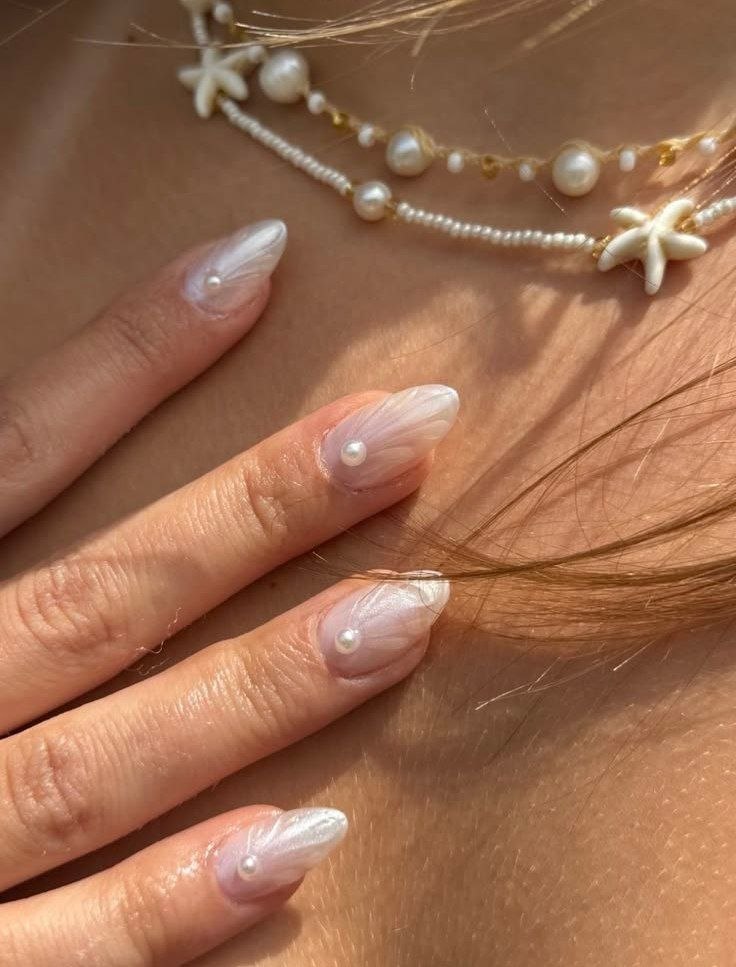
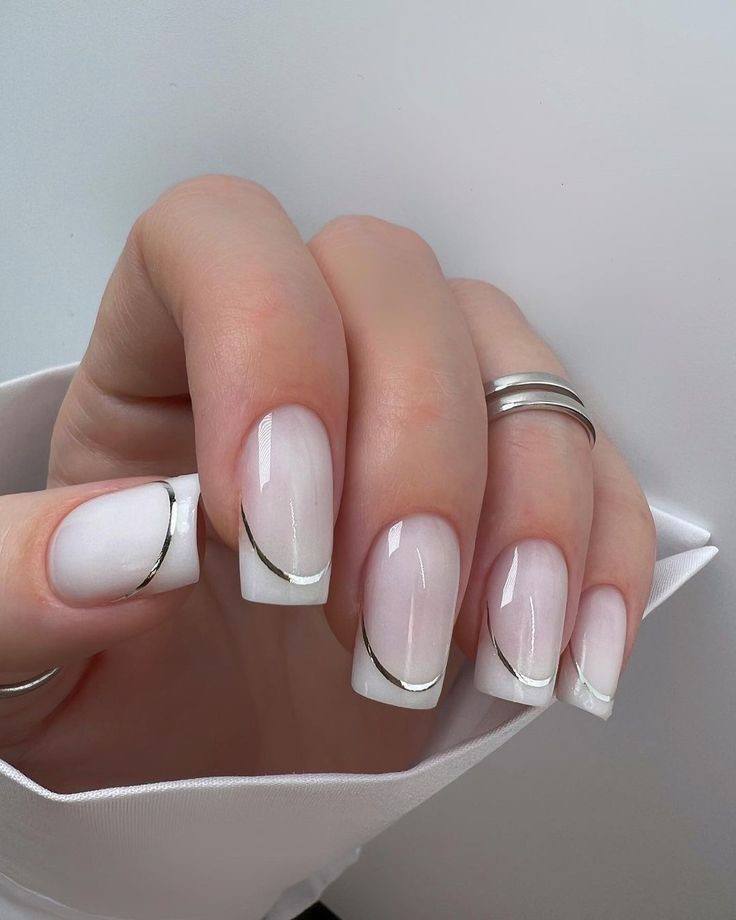
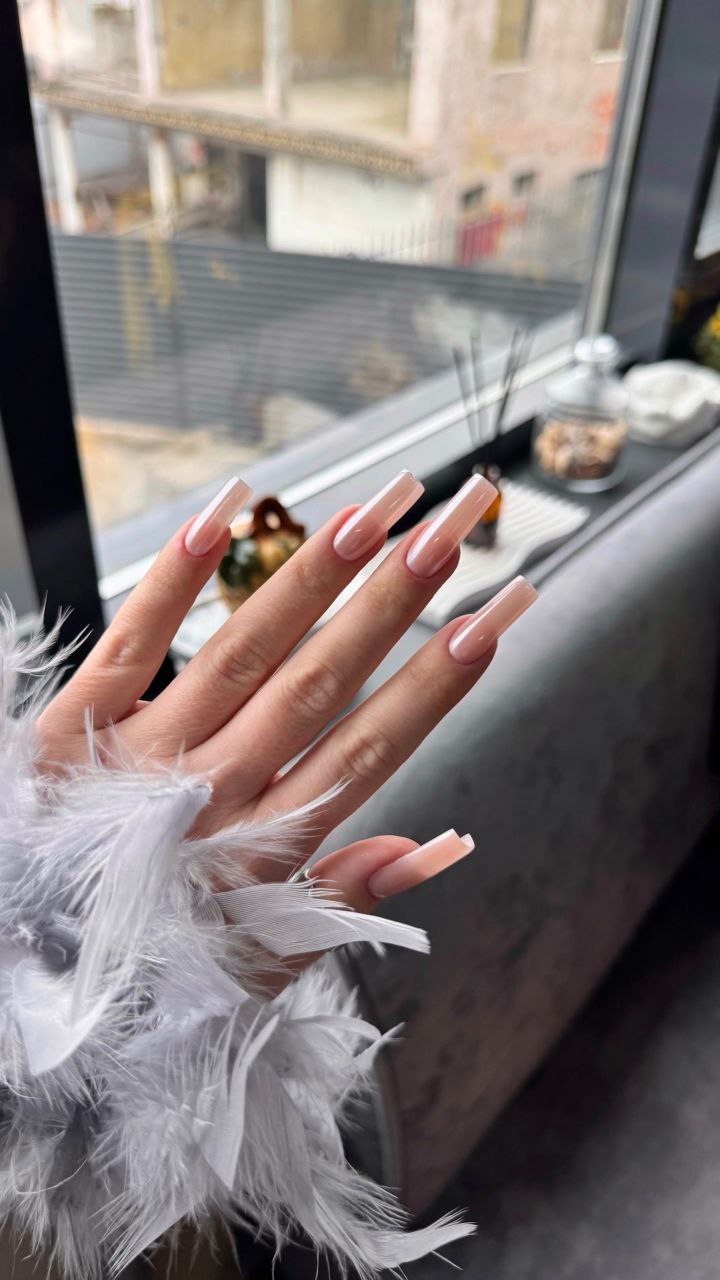
Pearlescent glaze nails are characterized by a multi-dimensional, light-reflective finish that relies on layering rather than simple pigmentation. Unlike traditional glitter manicures, which use distinct, visible particles to create sparkle, this trend utilizes a fine-milled, microscopic pigment to create a continuous, pearly sheen. The technical foundation of the look is a semi-translucent, milky base—often in shades of soft white, pale peach, or sheer nude—which allows the natural anatomy of the nail bed to show through. When a pearlescent powder is buffed into this base, the light does not simply bounce off the surface; it seems to be suspended within the layers, creating a soft-focus effect that mimics the inner luster of a seashell or the sheen of high-quality satin.
Behind the Trend
For much of the past year, the beauty landscape has been defined by high-contrast, high-energy aesthetics. We have seen a heavy lean toward maximalism: neon saturations, 3D textures, and bold, graphic shapes that demand immediate attention. While those trends have their place, there is a growing movement toward a more restrained, thoughtful way of presenting oneself. The rise of pearlescent glaze nails marks a transition toward what is often described as a “quiet” aesthetic—a move away from the loud and toward the refined.
This shift is not just about color; it is about a specific kind of visual temperature. Where bright neons feel warm and energetic, pearlescent finishes feel cool, calm, and sophisticated. It places the manicure in direct conversation with the current interest in “quiet luxury,” where the focus is placed on texture and subtle light play rather than obvious branding or heavy decoration. There is also a palpable sense of nostalgia woven into this look. It evokes the clean, minimalist lines of the late 1990s, reminiscent of the era’s fascination with slip dresses and monochromatic palettes, but it feels updated for a modern context through much more sophisticated light-reflecting technology.
There is a psychological comfort in these tones as well. As we move into spring, there is a natural desire to shed the weight of heavier textures. A manicure that feels light and translucent provides a sense of freshness. It acts as a neutral, meaning it does not compete with your wardrobe but instead complements it, making it a versatile choice for those who prefer a polished, cohesive look that works as well in a professional setting as it does during a weekend getaway.
How to Get Pearlescent Glaze Nails
Achieving this specific, luminous effect requires a focus on surface smoothness and the precision of your layering. To start, you will need a clean, well-buffed nail surface. Because the chrome pigment is so fine, any ridges or imperfections in your natural nail or your base coat will be magnified by the light refraction, resulting in a look that appears textured rather than smooth. A high-quality base coat is essential to create this level foundation.
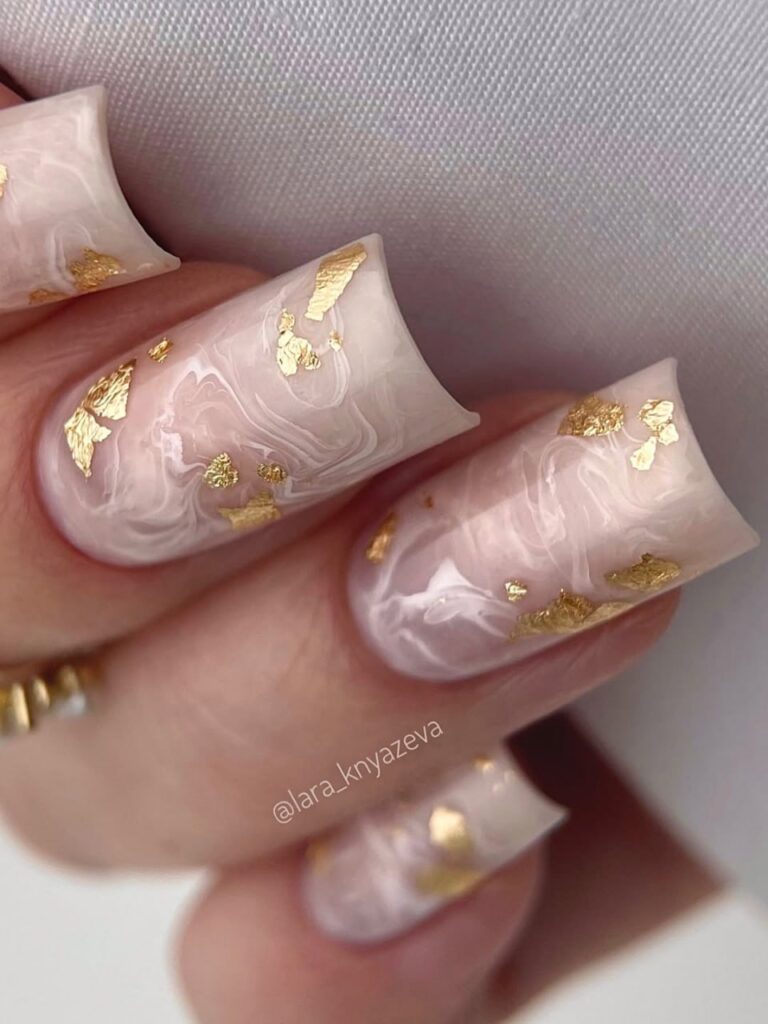
The next step involves selecting the right base color. You will want to look for a category of polish described as “milky” or “semi-sheer.” A true opaque white will look too flat and heavy, while a completely clear polish will lack the necessary depth. Aim for a shade that is slightly more pigmented than a clear coat but remains translucent. Depending on your skin tone, a pale pink or a soft, creamy nude will work beautifully. When applying this layer, remember that two thin coats are far more effective than one thick one. This allows you to build a controlled level of opacity that still feels light and airy.
Once your base color is fully set, you will introduce the star of the show: a pearlescent chrome powder or a fine-milled pigment. This is where the technique becomes crucial. You are not painting this on with a brush in the traditional sense; instead, you are buffing it into the surface. Using a small, soft applicator, gently press and rub the powder into the base color. This pressure is what allows the microscopic particles to settle into the top layer of your polish, creating that seamless, glass-like glow. If you apply too much powder at once, you risk a grainy texture. It is better to start with a minimal amount and buff it in, adding more only if you feel the shimmer is too subtle.
The final, and perhaps most important, step is the seal. To lock in the pigment and achieve that high-shine, professional finish, you must apply a high-quality, no-wipe top coat. This layer serves two purposes: it smooths out any remaining texture from the buffing process and provides the depth required to make the pearl effect truly pop. A top coat with a high-gloss finish will ensure the light travels through the layers of color and pigment, resulting in that sought-after, multidimensional glow.
If you find yourself wanting to experiment further, you can easily take this trend into more ethereal territory by choosing a pigment with a subtle color shift—something that moves between pale lavender and soft mint as you move your hands. Alternatively, for a slightly more tactile version, you might consider adding a single, tiny iridescent flake to the base of each nail to mimic the organic irregularities found in real mother-of-pearl.