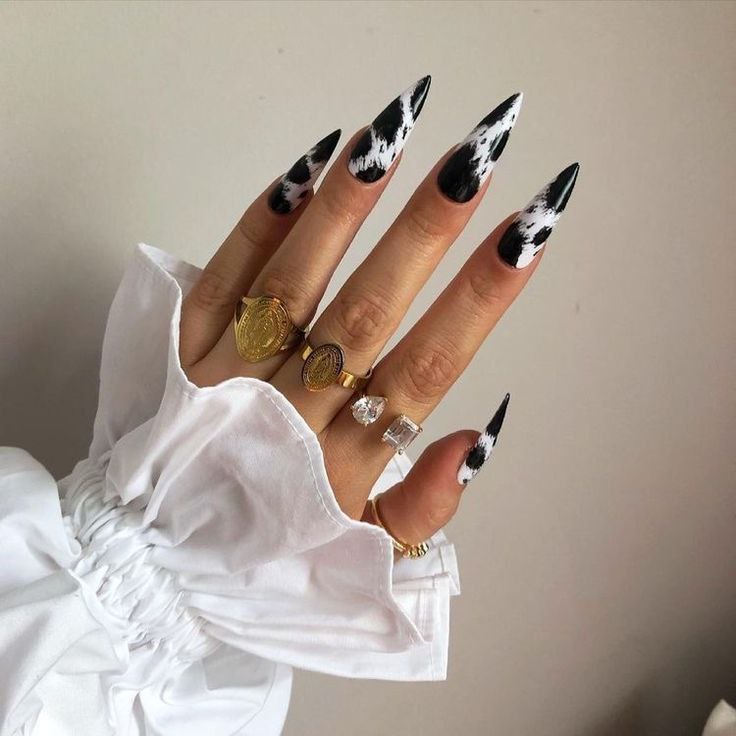
Try the Cow Print Nail Trend for the Boldest Fall Manicure
A little bit of chaos for your autumn wardrobe.
The air carries a sharp, biting chill that makes you pull your sweater closer to your chin. There is a specific kind of quiet that comes with a misty morning in a pasture, where the only sound is the rhythmic, heavy crunch of frost-covered grass underfoot. You can almost smell the woodsmoke drifting from a distant chimney and the scent of damp, dark earth settling in for the long season ahead. It is a time of heavy textures—thick wool, worn leather, and the rugged landscape of the countryside.
While you are likely sitting in a sunlit kitchen with a warm mug in hand rather than wandering through a foggy meadow, that sense of rustic, textured energy is exactly what you can bring to your fingertips. If you want to lean into the shift in atmosphere, the cow print manicure offers a way to carry that organic, earthy spirit with you, regardless of where you are.
Cow print nails feature an irregular, high-contrast pattern of black or dark brown blotches set against an opaque, milky white backdrop. The shapes are never uniform, geometric, or symmetrical; instead, they mimic the organic, sweeping curves found in nature. This look relies on a stark difference in pigment to create a visual pop that works across various nail lengths, from short, practical squares to dramatic, tapered stilettos.
Behind the Trend
There is a certain rebellion in choosing a pattern over a solid color. For a long time, the pendulum of nail fashion has swung heavily toward a specific kind of minimalist refinement—think sheer pinks, soft nudes, and the highly polished, almost invisible manicures that prioritize a “clean” aesthetic. Cow print acts as a counter-narrative to that stillness. It is intentional, it is loud, and it possesses a personality that neutral tones often lack. It moves the conversation away from perfection and toward character.
This trend also sits comfortably alongside the recent resurgence of western-inspired fashion and the return of maximalist prints. It feels connected to the tactile comfort of oversized flannel and the grit of autumn landscapes, tapping into a seasonal desire for items that feel grounded and unpretentious. Unlike the hyper-modern, liquid-metal look of chrome finishes that can sometimes feel cold or futuristic, cow print feels like it has a history. It echoes the patterns found in vintage textiles and the unpredictable beauty of the natural world, making it feel right at home as the leaves begin to turn.
How to Get Cow Print Nails
To achieve this look, you will first need a solid foundation of opaque white polish. A cream-finish polish works best because it provides a clean, bright canvas that allows the black shapes to stand out without looking muddy or grey. Start by applying two thin, even coats of the white polish to ensure there is no translucency. This stage is crucial; if your base is too sheer, the black pigment will interact with the natural nail underneath and create an uneven tone.
Once the base is completely dry, you can begin the patterning. Instead of reaching for a fine-tipped detail brush immediately, try using a small, synthetic dotting tool or even the tip of a bobby pin to map out the general placement of the spots. This helps you avoid overcrowding one nail while leaving another too bare. You want to aim for a sense of balance through asymmetry. If you are working with longer nail shapes like almonds or stilettos, you have more real estate to play with, allowing for larger, sweeping shapes. On shorter nails, you may want to opt for smaller, more scattered dots to prevent the pattern from looking cluttered.
After you have mapped your placement, use a black gel or a highly pigmented black lacquer to fill in the shapes. The key to making these look authentic is to avoid perfect circles. Allow the edges of the spots to bleed slightly into organic, wobbly lines, much like how a real animal’s markings might transition. If you are working with gel, work one nail at a time to prevent the black pigment from settling or spreading too much. If you are using traditional polish, patience is your best friend. Wait for the white base to be truly set before applying the black, or you risk pulling the white through the dark pigment and creating a bruised, greyish effect.
Finish the entire process with a high-shine top coat to seal the design and give it a smooth, professional surface. This extra layer of shine helps to marry the two colors together, making the pattern look like it is part of the nail rather than sitting on top of it.
If the full pattern feels a bit too much for your daily rotation, you can try a more subtle variation. A cow print French tip allows you to keep the majority of the nail a clean, neutral nude while concentrating the pattern only at the very edge. It provides a nod to the trend while maintaining a sense of polished restraint, making it an easy way to transition the look into a more professional setting.