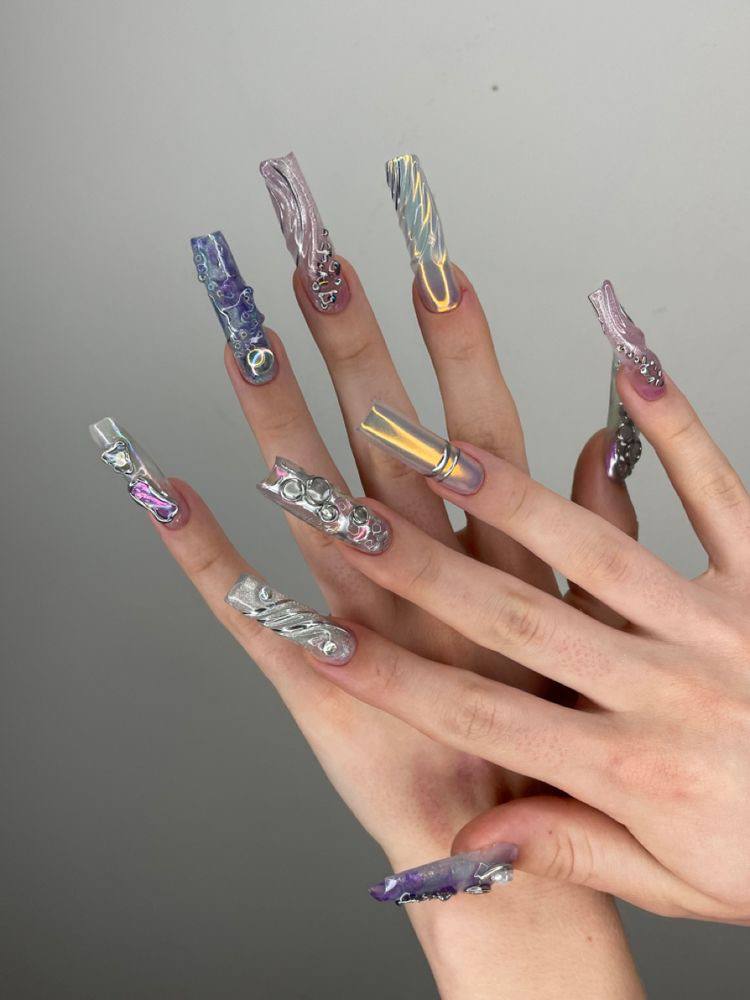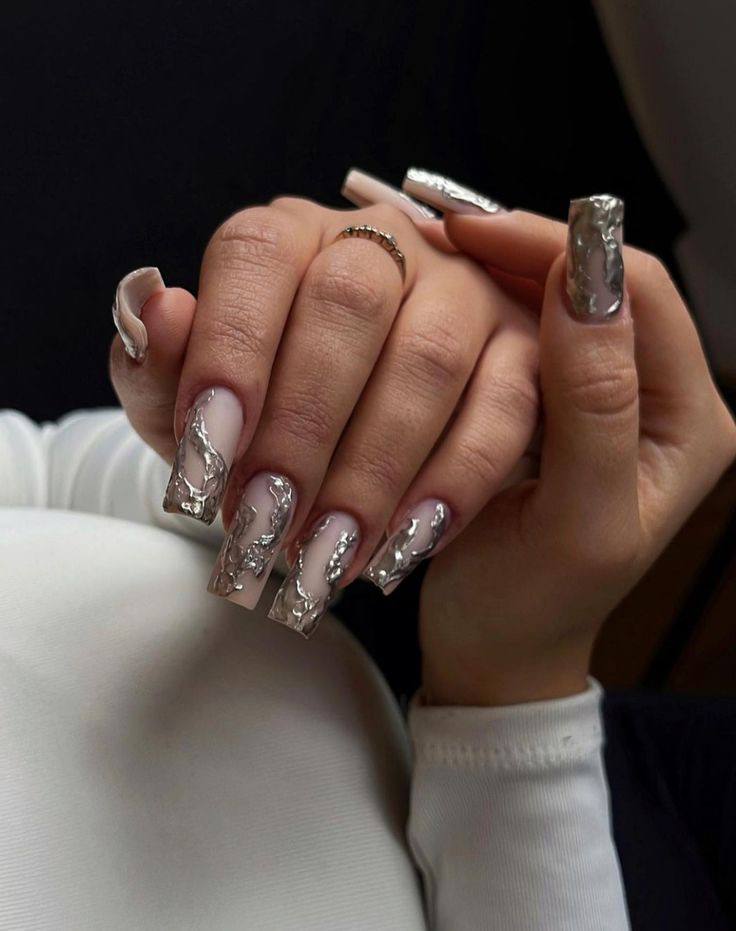
The visual weight of a manicure is shifting away from the flat, mirror-like surfaces of traditional chrome and toward something far more tactile and sculptural. There is a specific tension in a design that moves away from the predictable and toward the organic, utilizing light and shadow to create depth. Liquid metal nail art relies on this interplay, using three-dimensional textures to mimic the look of molten silver pooling across the nail bed. It is an aesthetic that feels less like a standard color application and more like a piece of wearable, irregular art, catching the light not just on a flat plane, but on every ridge and curve.
The Aesthetic of Molten Metallics
To understand this look, you must look past the standard shimmer of glitter or the uniform sheen of a metallic polish. Liquid metal is about dimension. The goal is to create a finish that appears viscous, as if the metal were caught in a state of transition between liquid and solid. This is achieved through a combination of sheer, translucent bases and heavy, opaque textures. When executed correctly, the design avoids looking cluttered; instead, it looks intentional, using the negative space of a nude or jelly base to highlight the weight of the silver elements. This contrast is what provides the sophisticated edge, making the metal appear to float atop the nail rather than simply sitting on it.
Mastering the 3D Application
Replicating this look requires moving beyond standard polish and embracing structural products. The foundation begins with a sheer, jelly-toned base. A translucent milky pink or a pale peach provides a clean, natural canvas that prevents the silver from looking heavy or disconnected from the hand. Once this base is cured, the architectural work begins.
To create the molten effect, you will need a high-viscosity builder gel or a non-wipe hard gel. Using a fine detail brush or a silicone sculpting tool, you apply the gel in irregular, sweeping motions. Instead of smoothing the gel out to create a flat surface, you intentionally leave ridges, droplets, and varying thicknesses. These shapes should feel spontaneous, mimicking the way liquid behaves when it flows. For those working at home, patience during the curing process is vital; you may need to perform a partial cure to manipulate the gel shapes before a final, full cure to set the structure.
Once the gel shapes are hardened, the metallic finish is applied. You have two primary routes: chrome powder or silver foil. For a more integrated, polished look, rub a fine silver chrome powder directly onto the raised gel surfaces. This creates a high-shine, metallic skin that follows every contour of your sculpting. If you prefer a more fragmented, high-contrast texture, apply pieces of silver foil to the gel ridges. This results in a more rugged, “crushed metal” appearance that provides even more light refraction. Regardless of the method, ensuring proper apex placement during the initial nail construction is critical, as the added weight of these 3D elements requires a strong, balanced foundation to prevent any lifting at the cuticle line.
Shape and Color Synergy
The success of a molten metal design is heavily dependent on the architecture of the nail. While these textures can be applied to shorter lengths, the look reaches its highest potential on elongated coffin or tapered square shapes. These elongated silhouettes provide the necessary real estate to allow the metallic lines to sweep across the nail without appearing cramped. The tapered edges of a coffin shape also help balance the visual weight of the heavy silver, preventing the hands from looking truncated.
When selecting a color palette, consider the undertones of your skin and the mood you wish to convey. A cool-toned, sheer nude paired with silver creates a modern, minimalist aesthetic that feels crisp and clean. For a more dramatic, nocturnal look, consider a sheer espresso or a deep charcoal jelly base. The dark, translucent background makes the silver appear much brighter and more substantial. If you are looking for a softer approach, a milky white base offers a subtle, ethereal contrast that works well for daytime wear or more formal, understated occasions.
Longevity and Structural Maintenance
Because liquid metal art involves physical height on the nail, maintenance requires a more disciplined approach than a standard gel manicure. The primary concern is the risk of snagging the raised edges on fabric, which can compromise the seal of your top coat or cause the design to chip. To mitigate this, ensure that your technician uses a high-viscosity top coat to encapsulate the edges of the 3D design, effectively smoothing out any sharp transitions between the gel and the base.
At home, your focus should remain on protecting the integrity of the manicure and the health of the surrounding skin. Applying a thick cuticle oil barrier daily is non-negotiable. Hydrated skin prevents the edges of the gel from looking dry or lifting, ensuring the transition between the nail and the finger remains clean and professional. When performing tasks that involve high impact or heavy manual labor, be mindful of the nail’s apex. The added texture can change how weight is distributed across the nail plate, so treating the nails with a degree of care will ensure the sculptural elements remain intact for the duration of the wear.
A New Standard of Ornamentation
Moving toward textured, metallic finishes allows you to express a sense of intentionality in your personal style. It is a departure from manicures that seek to blend in, offering instead a way to command attention through texture, shadow, and light. By understanding the technical requirements of the application—from the viscosity of the gel to the necessity of a strong apex—you can approach your next salon visit with the confidence to request a design that is as much a piece of sculpture as it is a manicure.