Try the Soft Polka Dot Nail Trend for the Sweetest Spring Manicure
It is destined to be a repeat favorite.
The air carries a different weight in late spring. It is a specific kind of warmth that feels less like the heavy heat of July and more like a gentle invitation. You might find yourself noticing the way light filters through new willow leaves, or the scent of damp earth and crushed mint after a sudden afternoon shower. There is a certain lightness to the season, a feeling of things beginning again, draped in textures like washed linen and cool, smooth porcelain.
While you may not be spending your afternoon in a sun-drenched meadow, you can certainly carry that sense of airy, quiet charm with you. It is possible to capture that specific seasonal mood through something as small and intentional as your manicure. Moving away from the heavy textures of winter, a certain type of graphic, playful pattern is beginning to emerge as the preferred way to signal the change in weather.
What Are Soft Polka Dot Nails?
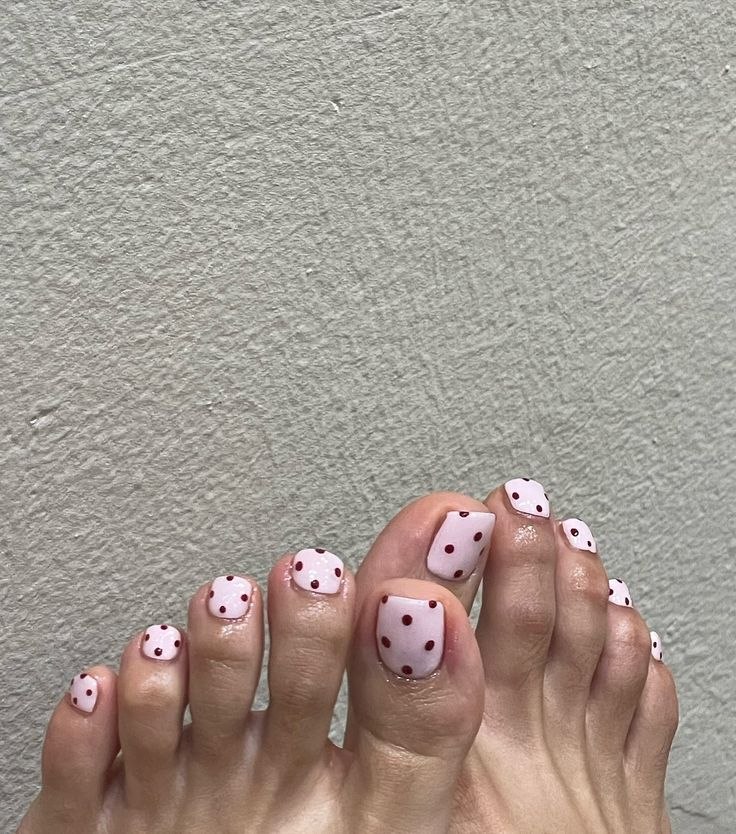
This manicure is defined by its clean, graphic simplicity and its use of high-contrast colors on a semi-sheer base. The look relies on a milky, translucent pink polish that mimics the appearance of healthy, natural nail beds or soft petal tones. On top of this quiet foundation, small, perfectly circular dots are placed with intentional spacing. These dots are typically a deeper, more saturated shade—such as a dark cherry, a navy, or even a forest green—creating a look that is more about pattern and rhythm than complex artistry.
Behind the Trend
There is a noticeable shift happening in the world of nail art. For much of the past year, the aesthetic leaned heavily into the futuristic and the maximalist. You likely saw endless iterations of chrome finishes that looked like liquid metal, or thick, 3D jelly textures that felt sculptural and almost heavy. While those looks were visually striking, they often felt somewhat detached from the natural world. The current move toward soft polka dots represents a return to something more human, more tactile, and arguably more nostalgic.
This trend taps into a specific kind of vintage whimsy, reminiscent of mid-century sundresses or the patterns found on fine stationery. It feels grounded in a way that chrome does not. It sits in a comfortable middle ground between the “clean girl” aesthetic of sheer, unadorned nails and the high-effort complexity of hand-painted floral art. By using a pattern as classic as the polka dot, the manicure feels timeless rather than fleeting. It evokes a sense of calm, orderly playfulness that feels particularly appropriate as we move into seasons of growth and outdoor gatherings.
How to Get Soft Polka Dot Nails
Achieving this look at home or in a salon requires a focus on precision and patience rather than complicated tools. The foundation is the most critical element. You should begin with a sheer, milky pink polish. This category of polish is essential because it allows a hint of your natural nail to show through, which prevents the manicure from looking too heavy or “painted on.” Two thin coats will read more true-to-trend than three thick layers, as you want to maintain that translucent, ethereal quality.
Once your base color is completely dry, you will need a high-pigment, opaque polish in a contrasting shade. For the most classic version of this trend, a deep burgundy or a rich chocolate brown works beautifully. To create the dots, a professional dotting tool is the most reliable option, though a clean toothpick or the head of a sturdy sewing pin can suffice in a pinch. The technique is all in the pressure. You want to dip the tip of your tool into the dark polish, wipe off any excess so the drop is controlled, and then tap the tool vertically onto the nail. Avoid dragging the tool across the surface, which will create teardrop shapes instead of perfect circles. Instead, a light, decisive tap will yield the clean, circular edges required for this look.
Spacing is what separates a sophisticated polka dot mani from one that looks cluttered. You should aim for a deliberate, somewhat irregular distribution of dots rather than a perfect grid. This randomness gives the manicure its organic, breezy feeling. After you have placed your dots, allow them to dry thoroughly before applying a high-shine clear top coat. The gloss of the top coat will meld the dots into the base, making them look like they are part of the nail rather than sitting on top of it. If you prefer a more modern, muted take, a matte top coat can also work, giving the nails a finish that feels more like ceramic or fine paper.
If you find yourself wanting to experiment further, try playing with the scale of the dots. For a more avant-garde version, you can use much larger, oversized dots that take up most of the nail surface, or conversely, move toward “micro-dots” that are barely visible to the naked eye, appearing almost like a subtle texture from a distance.