The shift toward sculptural, tactile nail art marks a transition in how we approach personal adornment. Rather than focusing on flat, two-dimensional pigment, the current aesthetic leans into light refraction, physical dimension, and the interplay of varying textures. We are seeing a departure from the polished minimalism of previous seasons in favor of something more experimental and structural. The most compelling iteration of this movement is the liquid metal aesthetic, a style that utilizes high-viscosity gels to create the illusion of molten silver flowing across a translucent canvas.
The Liquid Metal Aesthetic
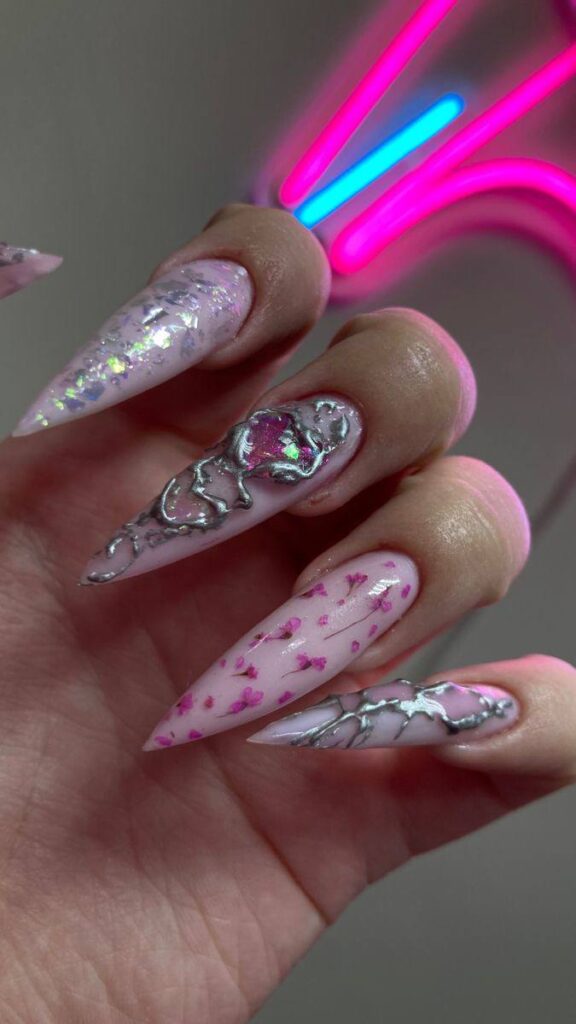
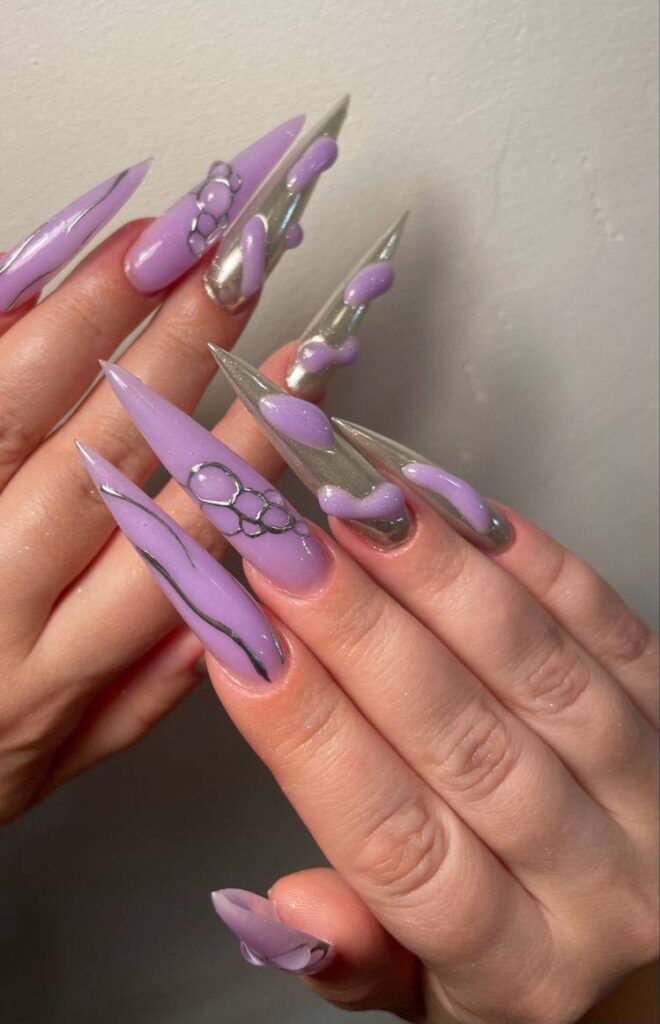
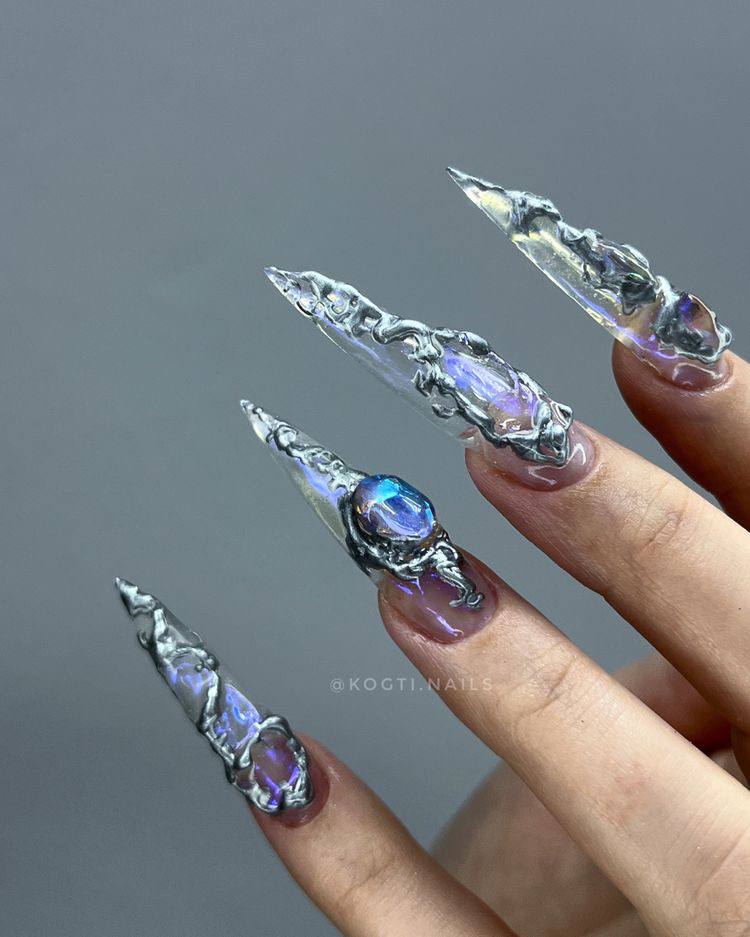
The core of this look relies on the calculated juxtaposition of a sheer, jelly-like base and heavy, opaque metallic elements. This is not a uniform application of color; instead, it is a deliberate disruption of the nail surface. By utilizing a clear or slightly tinted jelly base, you create a sense of depth that makes the silver accents appear as though they are suspended within or resting heavily upon the nail plate. This transparency is vital. Without a translucent foundation, the metallic elements lose their sense of weightlessness and instead look like heavy, flat stickers. The goal is to mimic the organic, unpredictable movement of mercury, where light hits the curves of the metal and creates sharp, reflective highlights.
Technical Execution and Sculptural Application
Replicating this look requires a move away from standard polish and toward professional-grade construction products. To achieve the necessary structural integrity, you must begin with a solid foundation, typically a builder gel or a structured manicure. Proper apex placement is non-negotiable here; because the 3D elements add actual weight and thickness to the nail, the underlying architecture must be strong enough to prevent breakage or lifting.
Once your base is cured, the sculpting begins. You will need a high-viscosity sculpting gel or a thick builder gel that holds its shape without leveling out too quickly. Using a fine-tipped liner brush, you can manipulate the gel into organic, flowing lines. Avoid geometric or symmetrical patterns, as the appeal of this style lies in its perceived randomness. Think of creating narrow veins or thick, rounded droplets that seem to have just settled on the surface.
Once the sculpted shapes are cured, the transformation into metal occurs through the application of chrome powder. You rub the fine silver powder over the raised textures, which adheres to the surface to create a mirror-like, hyper-reflective finish. For a more complex, high-jewelry appearance, you can embed iridescent rhinestones or teardrop-shaped gems into the gel while it is still in its semi-liquid state, before the final cure. This integrates the stones into the design, making them appear as if they are caught in the flow of the metal rather than simply glued on top.
Shape and Color Pairings
The visual impact of liquid metal is heavily influenced by the silhouette of the nail. A stiletto shape provides the most dramatic canvas, offering long, tapered edges that allow for trailing metallic lines to extend toward the tip. This creates an elongated, aggressive elegance. If you prefer a more tempered version of the trend, an almond or even a long squoval shape can work. These shapes ground the look, making the metallic elements feel like a modern embellishment rather than a total transformation.
Color theory plays a significant role in how the silver is perceived. A clear, colorless jelly base offers the most futuristic, clean look, emphasizing the high-shine chrome. However, you can manipulate the mood by tinting the base. A pale, milky lavender jelly provides a celestial, ethereal quality, while a soft peach or nude jelly makes the silver feel more integrated into a daily, wearable palette. If you want to lean into a more avant-garde, cyber-core aesthetic, a smoky grey jelly base can heighten the industrial feel of the silver.
Longevity and Professional Maintenance
Because 3D nail art involves raised surfaces, your maintenance routine must be more intentional than it is for a standard manicure. The primary concern is the physical profile of the nail. These textures can occasionally snag on delicate fabrics, such as silk or fine-gauge knits, so ensuring that the edges of the 3D gel are smoothly sealed with a high-quality, high-shine top coat is essential. A well-sealed edge prevents the gel from catching and chipping away from the base.
Furthermore, the longevity of the translucent base depends on the health of the surrounding skin. To keep the jelly finish looking clear and intentional, you must prioritize a consistent cuticle oil barrier. When the skin around the nail becomes dehydrated or ragged, it draws attention away from the art and makes the manicure look neglected. Keeping the cuticle area hydrated ensures that the focus remains entirely on the light play and the metallic texture of the design.
The ability to wear such a deliberate, sculptural statement is a reflection of a highly curated personal style. Whether you opt for a single, sweeping silver vein or a fully textured, gem-encrusted masterpiece, you are treating your hands as a medium for sophisticated, tactile art.