Try the Pressed Flower Nail Trend for the Dreamiest Spring Manicure
A delicate way to carry the season with you.
You are standing at the edge of a garden just as the morning mist begins to lift. There is a particular kind of quiet that only exists in early spring—a stillness that feels heavy with the promise of what is about to bloom. You can feel the cool, damp air against your skin, and the scent of crushed grass and wet cedar clings to the breeze. Everything feels soft, slightly blurred around the edges, like a watercolor painting left out to dry in the pale sunlight.
You aren’t necessarily spending your morning wandering through a damp meadow, but you can carry that sense of quiet, organic beauty with you through your daily life. A manicure can act as a small, wearable piece of that scenery, bringing a touch of the natural world to your desk, your coffee cup, and your phone.
What Are Pressed Flower Nails?
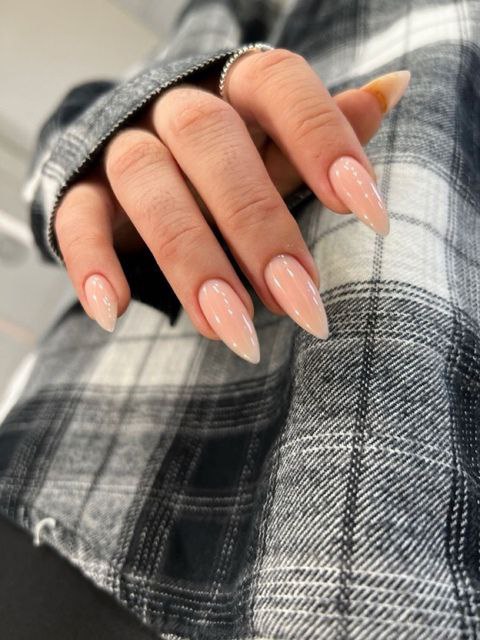
Pressed flower nails are defined by their high level of translucency and their botanical subject matter. This technique relies on a sheer, jelly-like base—often in shades of milky white, pale peach, or soft lavender—to create a sense of depth within the nail plate. Unlike opaque, solid colors, these manicures utilize the light-passing properties of sheer pigments to mimic the appearance of a dried petal or a specimen preserved in glass. The visual identity is completed by the addition of fine-lined floral motifs or the actual placement of miniature, dried blossoms, all of which are encapsulated under a thick, high-shine top coat to create a smooth, lens-like finish.
Behind the Trend
For much of the recent past, the prevailing mood in beauty has been one of sharp, clean precision. We have seen a long period of dominance for the “clean girl” aesthetic, characterized by slicked-back hair, monochromatic neutrals, and a sense of hyper-organized minimalism. While there is a certain comfort in that polished, almost architectural look, there is a growing movement toward something more whimsical and storytelling-driven. We are seeing a shift away from the cold, metallic surfaces of the chrome and “glazed” trends and moving toward something that feels more lived-in and romantic.
Pressed flower nails resonate because they offer a sense of nostalgia. They evoke the feeling of finding a pressed daisy inside a long-forgotten journal or a dried sprig of lavender in a summer keepsake box. It is a trend that embraces the organic and the slightly imperfect, contrasting the robotic perfection of recent trends with a sense of human touch. It feels less like a beauty standard to be met and more like a personal ritual to be enjoyed, tapping into a collective desire for softness and a connection to the changing seasons.
How to Get Pressed Flower Nails
To achieve this look, you will first need to focus on creating the illusion of depth. Start with a base of jelly polish or a very sheer, milky gel. The key is to avoid any color that is too opaque; you want the light to be able to travel through the polish, much like it does through a real petal. Apply two very thin, even coats rather than one heavy layer. This allows you to build up the color gradually while maintaining that essential translucency. If the color looks too flat, you can lightly buff the surface before your next layer to help the next coat sit more naturally.
Once your base is perfectly set, you can begin the artistic portion of the manicure. If you are working with traditional polish, you will want a fine-liner brush and a highly pigmented, thin-viscosity polish in shades like soft white, sage green, or a muted rose. When painting your flowers, move with a light hand. Instead of applying heavy drops of color, use the tip of the brush to pull thin, tapering lines that form the petals. A little bit of irregularity goes a long way here; a perfectly symmetrical flower can feel a bit too manufactured, whereas a slightly uneven, wild-looking bloom feels much more authentic to the trend. If you prefer using actual dried flowers, you can use a tiny amount of clear builder gel to act as an adhesive, carefully placing each miniature petal onto the sheer base.
The final, most critical step is the encapsulation. To get that professional, glass-like finish that makes the flowers appear to be floating deep within the nail, you must use a high-shine, thick-viscosity top coat. Apply a generous layer, ensuring that you cover every bit of the hand-painted detail or the dried petals. This layer does more than just provide shine; it smooths out any texture from your artwork and creates the optical illusion of a specimen trapped behind a lens. Taking your time with this final layer will ensure the manicure feels seamless and sophisticated.
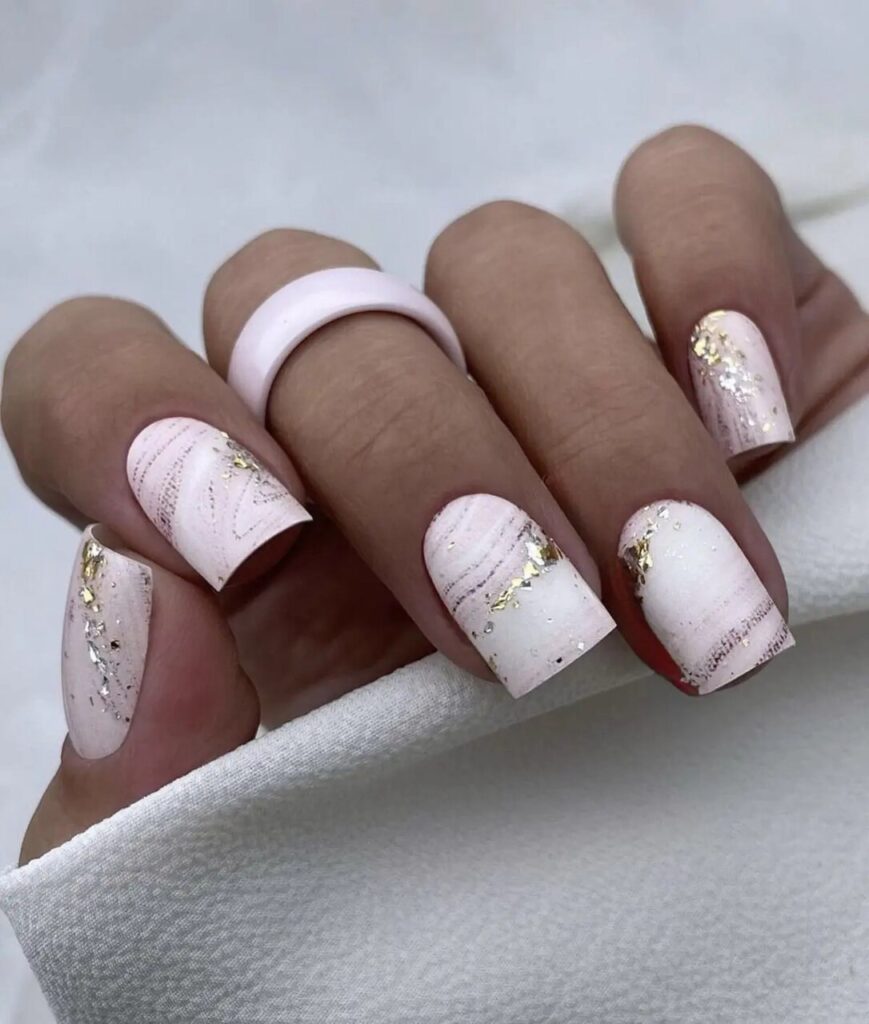
If you find yourself wanting to take this look into a more formal territory, try incorporating a few tiny, gold-leaf flecks or microscopic pearlescent beads among the petals. This subtle addition transforms the manicure from a simple botanical study into something that feels like a piece of vintage, heirloom jewelry.