The Visual Tension of Crimson and Cream
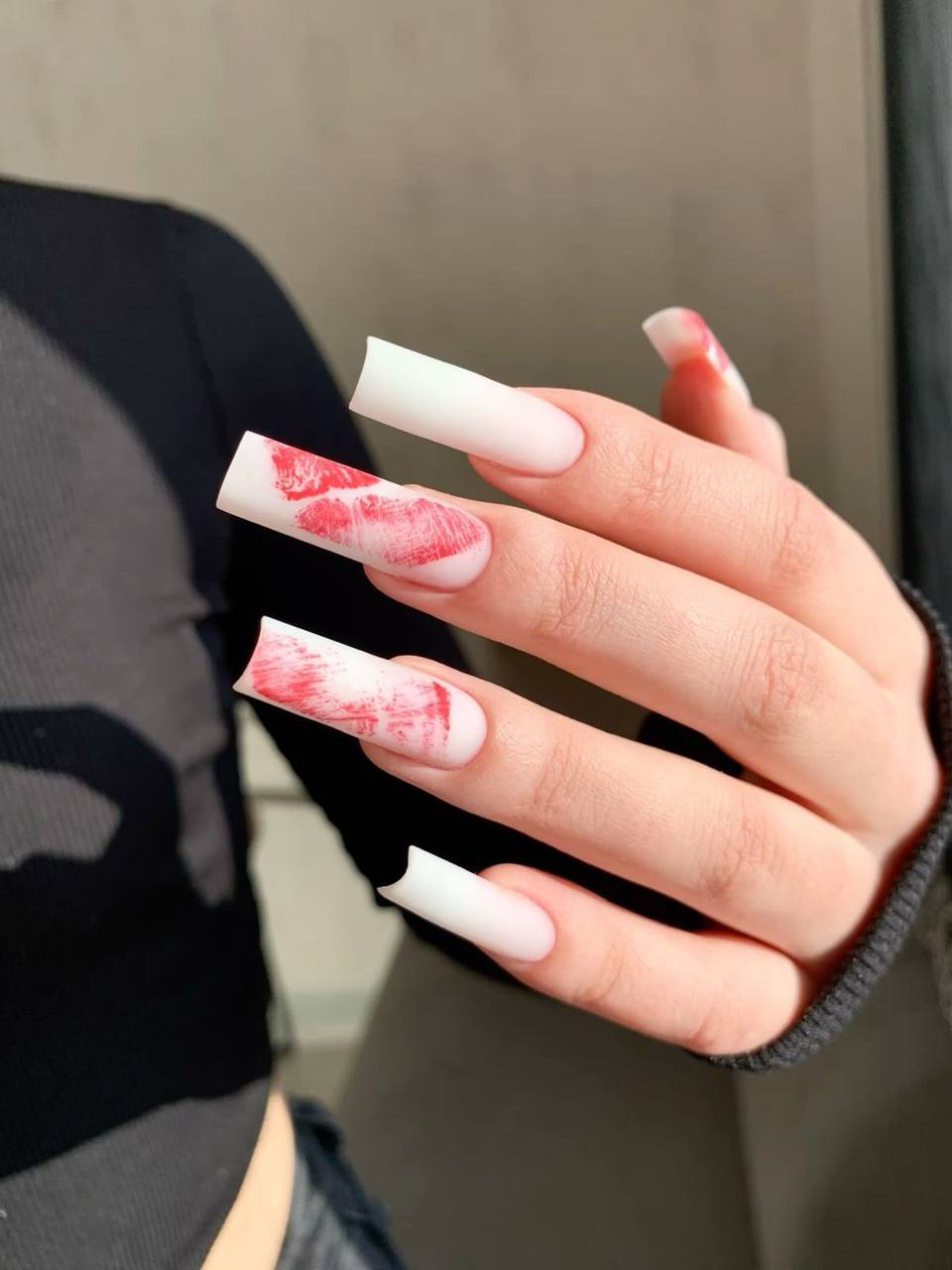
There is a specific, intentional tension found in the contrast of a saturated red pigment against a milky, semi-opaque white base. It is a look that avoids the prettiness of traditional floral nail art in favor of something more cinematic and slightly provocative. When you move away from the high-shine, jelly-like finishes of summer and toward a matte, velvet texture, the entire mood of the manicure shifts. The red lip print motif acts as a focal point, a singular graphic element that breaks up the expanse of the white, creating a look that feels more like a piece of fine art than a standard salon service.
The Aesthetic of the Milky Matte Base
Achieving this specific look begins with the foundation of the color. You are not looking for a stark, opaque optic white, which can often look heavy or artificial on the nail bed. Instead, the goal is a milky, translucent finish. This is best achieved using a semi-opaque builder gel or a milky-toned soak-off gel in a shade that mimics the appearance of cream or porcelain. This translucency allows for a soft-focus effect, where the light interacts with the nail in a way that feels organic rather than plastic.
To move the look from high-gloss to something more sophisticated, a matte top coat is used to diffuse the light. This matte finish removes the traditional reflections from the nail surface, giving the color a velvet-like quality. When the red pigment is applied over this matte base, it doesn’t look like a shiny sticker; rather, it appears as if the impression has been absorbed into the texture of the nail itself. This lack of shine is what prevents the design from feeling juvenile, grounding the red in a more mature, editorial context.
Technical Execution and Structural Integrity
For those working with longer shapes, such as the coffin or ballerina silhouette seen here, structural integrity is the first priority. A long nail without a properly placed apex is prone to snapping at the stress points. When applying your builder gel to create that milky base, you must ensure the apex placement is centered to provide a slight curve that supports the length. This architecture is what allows the nail to maintain its shape under daily pressure.
Once the milky base is cured and the matte top coat is applied, the red impression can be layered on. If you are replicating this at home, you can achieve a realistic lip texture using a stamping plate with a fine-line lip pattern, or by using a thin detail brush and a highly pigmented red gel. The key is to avoid a solid block of red. A true lip print has varying levels of saturation, with some areas appearing more translucent and others more concentrated. This creates the illusion of a real impression. If you are using a stamping method, ensure you are working over a cured matte layer to avoid smearing, though you may need to apply a second thin layer of matte top coat to seal the red pigment and maintain that consistent velvet texture.
Shape, Color, and Silhouette Pairings
The coffin shape is the most effective canvas for this specific art style. Its long, tapered sides provide a large surface area for the red motif to breathe, ensuring the design doesn’t feel cramped. The sharp, squared-off tip of the coffin shape complements the graphic nature of the lip print, creating a cohesive, sharp silhouette. If you prefer a softer approach, a squoval shape can work, but it will naturally lean more toward a casual, everyday aesthetic.
Color theory plays a significant role in how this look is perceived. A bright, true red offers a high-contrast, classic look that feels very mid-century modern. If you want to lean into a more moody, autumnal vibe, an oxblood or deep burgundy pigment provides a more subtle, sophisticated impression. You can also experiment with the base color; while milky white is the standard, a sheer, pale nude base can make the red print feel more integrated into the natural nail, whereas a light grey base can push the aesthetic into a more contemporary, cool-toned direction.
Longevity and Maintenance of Matte Finishes
One of the primary challenges of a matte manicure is its tendency to change texture over time. As natural oils from your skin and cuticle oils interact with the matte top coat, the surface can begin to develop a localized shine, particularly at the tips or near the cuticle. To prevent this, it is vital to maintain a consistent cuticle oil barrier. Applying a lightweight, non-greasy oil to the surrounding skin will prevent the natural oils from migrating too heavily onto the nail plate itself.
To keep the red pigment from fading or losing its crispness, avoid using harsh chemical cleaners or long periods of soaking in water, which can cause the gel to lift at the edges. If you notice the matte finish beginning to look patchy or shiny after a week, you can gently buff the surface with a very fine grit buffer and apply a fresh layer of matte top coat to restore the velvet texture. This simple maintenance step ensures the manicure remains sharp and intentional until your next scheduled appointment.
This aesthetic is about the confidence of a deliberate choice. Whether you are requesting this specific combination of milky tones and crimson impressions at a salon or refining the technique yourself, the result is a manicure that speaks to a refined, individualistic sensibility.