The Translucent Shift: Mastering Jelly Nails with Chrome Linework
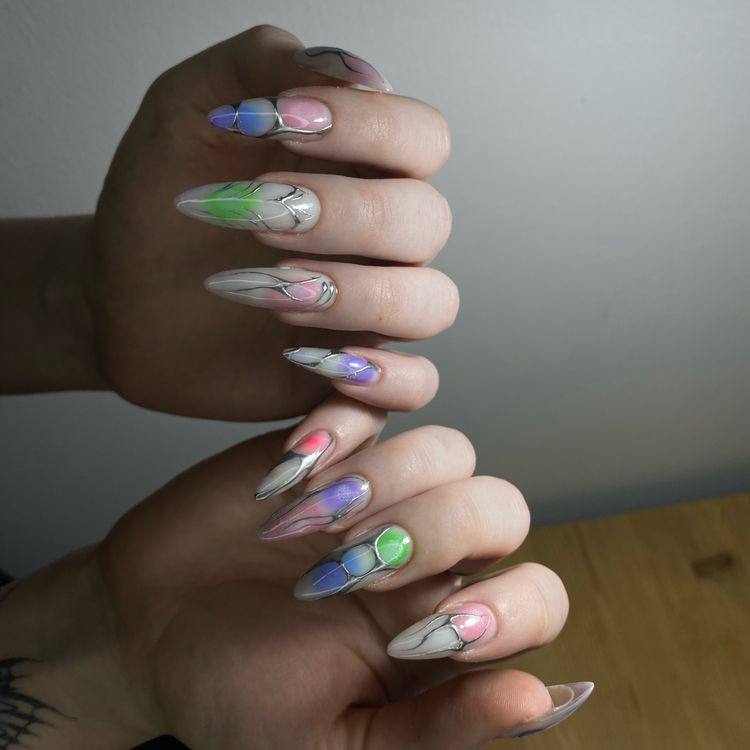
The shift in contemporary nail aesthetics has moved away from the heavy, opaque coverage of the past toward a more nuanced appreciation for light and depth. While solid colors provide a sense of structure, they can often feel flat against the skin. The current interest in jelly nails paired with chrome linework offers a sophisticated alternative, utilizing translucency to mimic the look of stained glass or polished gemstones. This technique relies on the interplay between sheer, pigmented layers and sharp, metallic boundaries, creating a visual depth that traditional manicures cannot replicate.
The Science of the Jelly Aesthetic
To achieve this look, you must first understand the specific behavior of jelly polish. Unlike standard lacquer, which is designed to provide full coverage in one or two coats, jelly polish is formulated with a lower pigment density. This allows light to pass through the color and reflect off the natural nail bed or a base layer, creating an optical effect known as light refraction. This translucency gives the nails a sense of volume and dimension, making the color appear as though it is suspended within the nail rather than sitting on top of it.
When working with these sheer tones, the goal is to build depth through layering. A single coat of a mint green or lavender jelly polish will appear almost clear; however, applying two or three thin layers allows you to control the saturation and create a gradient or ombré effect. This layering process is what provides the characteristic glass-like finish that defines the aesthetic.
Technical Application and Chrome Integration
Executing this look requires precision, particularly when transitioning from the soft, fluid nature of the jelly base to the sharp, structural lines of the chrome. Whether you are performing this at home with gel kits or requesting it at a salon, the sequence of application is critical to preventing a muddy finish.
Begin with a clean, dry manicure to ensure the cuticle area is free of debris, which allows the sheer polish to sit flush against the skin. Apply a clear base coat to create a smooth canvas. Once your base is set, begin building your color. If you are aiming for a multi-tonal look, apply different jelly hues to different sections of the nail, allowing them to blend slightly at the edges to create a soft transition.
The most technical phase involves the chrome linework. For a professional finish, use a fine liner brush and a high-pigment silver gel or chrome powder. If you are using chrome powder, you must apply a non-wipe top coat over your dried jelly layers first. While the top coat is still slightly tacky, buff the chrome powder onto specific areas or use the brush to draw precise, thin boundaries between the color zones. This silver linework acts as a structural element, containing the color and providing a sharp contrast to the softness of the jelly. To finish, apply a high-shine top coat to encapsulate the design, ensuring the chrome lines are protected from scratching or dulling.
Shape and Color Theory
The success of this aesthetic is heavily dependent on the choice of nail shape. Because the jelly and chrome combination is inherently modern and somewhat avant-garde, it pairs exceptionally well with elongated shapes like stiletto or almond. These shapes provide a larger surface area for the light to move through the translucent pigment and allow for more dramatic, sweeping chrome lines. When choosing a shape, pay close attention to the apex placement; a well-structured apex ensures that the long, tapered tip remains strong and does not become prone to snapping.
Color pairings can dictate the mood of the manicure. For a refined, daytime look, lean into muted pastels—think seafoam green, pale peach, or soft lilac. These colors, when separated by silver chrome, feel airy and light. For a more high-contrast, evening aesthetic, utilize neon jelly tones like electric blue or vibrant lime. The silver linework provides a necessary grounding element to these bright hues, preventing the neon from feeling overwhelming and instead making it appear curated and intentional.
Maintaining High-Shine Integrity
Because this style relies so heavily on the clarity of the polish and the brightness of the metallic lines, maintenance is key to preventing the look from appearing aged. The most common issue with sheer manicures is the appearance of regrowth or staining at the cuticle line. To combat this, maintain a strict cuticle oil barrier. Applying oil twice daily keeps the surrounding skin hydrated and prevents the edges of the gel from lifting, which can compromise the seamless look of the jelly finish.
Additionally, be mindful of physical wear. While a high-quality top coat provides significant protection, the chrome elements can occasionally lose their luster if subjected to harsh chemicals or frequent abrasive contact. Use gentle hand soaps and avoid prolonged exposure to cleaning agents to preserve the reflective quality of the silver linework.
Taking Control of Your Aesthetic
The movement toward translucency and metallic accents is more than a passing trend; it is a sophisticated way to play with texture and light. By understanding the mechanics of pigment density and the precision required for chrome application, you can move beyond standard color choices and embrace a more architectural approach to nail art. Whether you choose a soft pastel almond shape or a bold neon stiletto, you now have the technical vocabulary to command this look with confidence.