The shift from opaque, solid color to a nuanced play of light and texture marks a sophisticated turn in contemporary manicure trends. While the minimalist aesthetic of recent years prioritized a clean, almost clinical look, the current move toward 3D molten chrome on jelly bases introduces a layer of depth that feels both sculptural and organic. This style relies on the tension between two opposing textures: the soft, translucent depth of a jelly finish and the hard, reflective strike of metallic lines. It is a look that demands attention through subtlety rather than loud, saturated pigments, making it a preferred choice for those who appreciate fine detail and technical precision.
The Intersection of Translucency and Metal
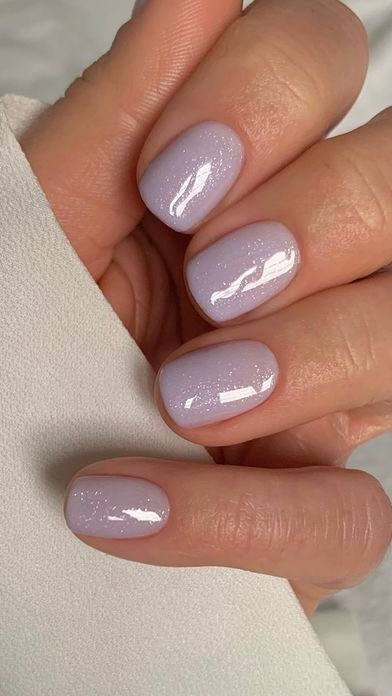
At the heart of this aesthetic is the jelly base, a polish or builder gel designed with high translucency and low pigment density. Unlike a standard cream polish that sits heavily on the nail plate, a jelly finish allows light to pass through the color, creating a sense of subsurface scattering. This gives the nails a glass-like or water-like quality, where the color appears to live within the nail rather than just on top of it. Depending on the tint chosen, this can range from a sheer, milky peach to a muted, bruised mauve or a clear, rose-water pink.
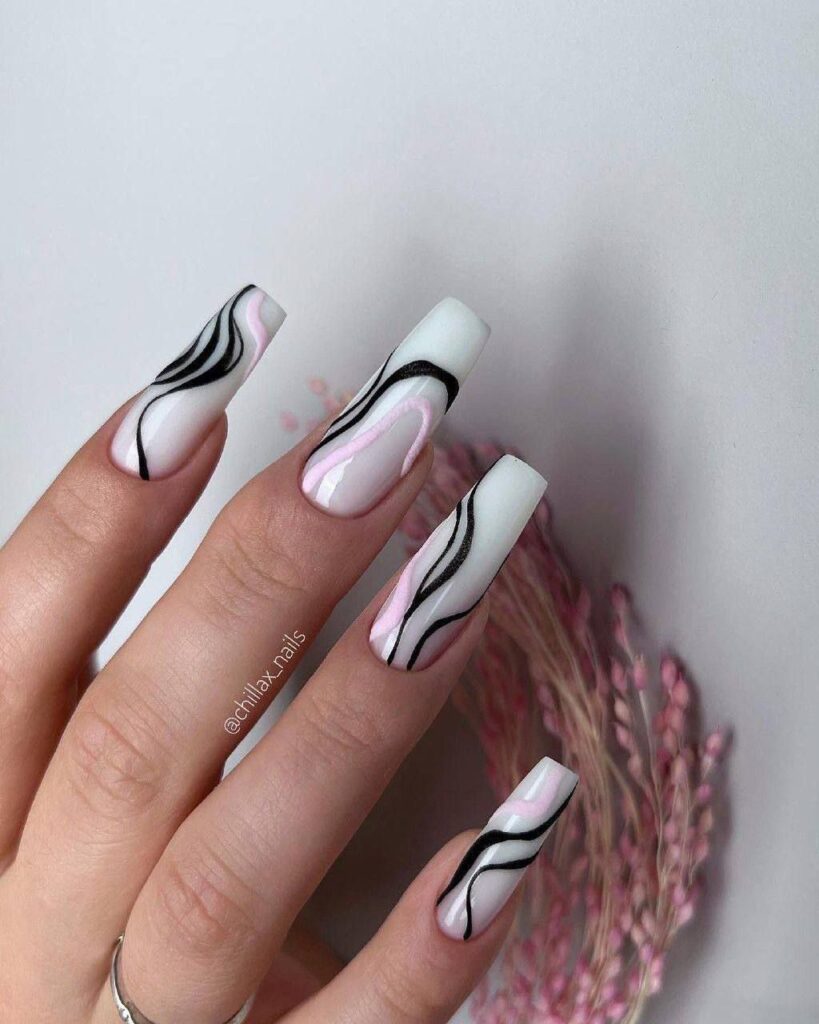
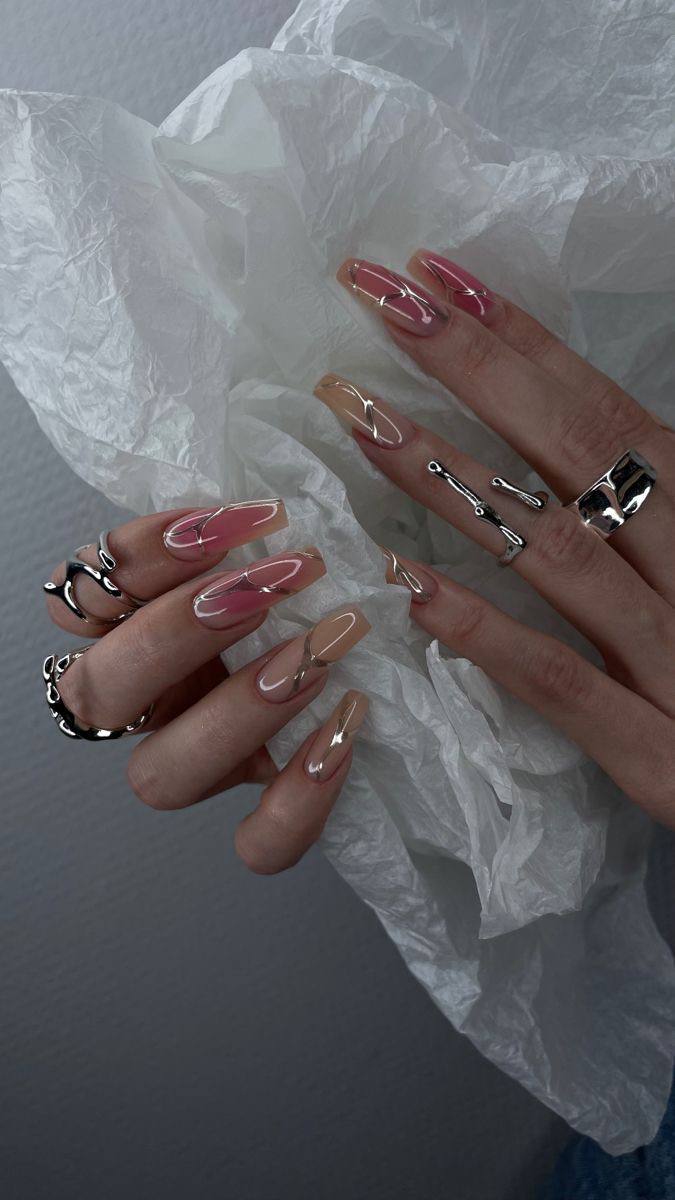
Layering this softness with 3D chrome elements creates a visual hierarchy. The chrome does not sit flat; it is sculpted into irregular, fluid shapes that mimic liquid mercury or melting metal. This contrast is what gives the manicure its character. The eye is drawn to the way the sharp, bright reflections of the silver dance across the soft, blurred edges of the sheer base. It is a sophisticated way to wear nail art that avoids the heavy, patterned look of traditional decals or hand-painted motifs.
Mastering the Jelly Foundation and 3D Relief
To achieve this look, whether at a salon or through a meticulous home session, the technical execution must be precise. The foundation begins with the preparation of the nail plate and the application of a tinted builder gel. To ensure longevity and a natural silhouette, the builder gel should be applied with careful attention to apex placement. The apex is the highest point of the nail’s curve, which provides the structural integrity needed to prevent snapping, especially when working with longer extensions.
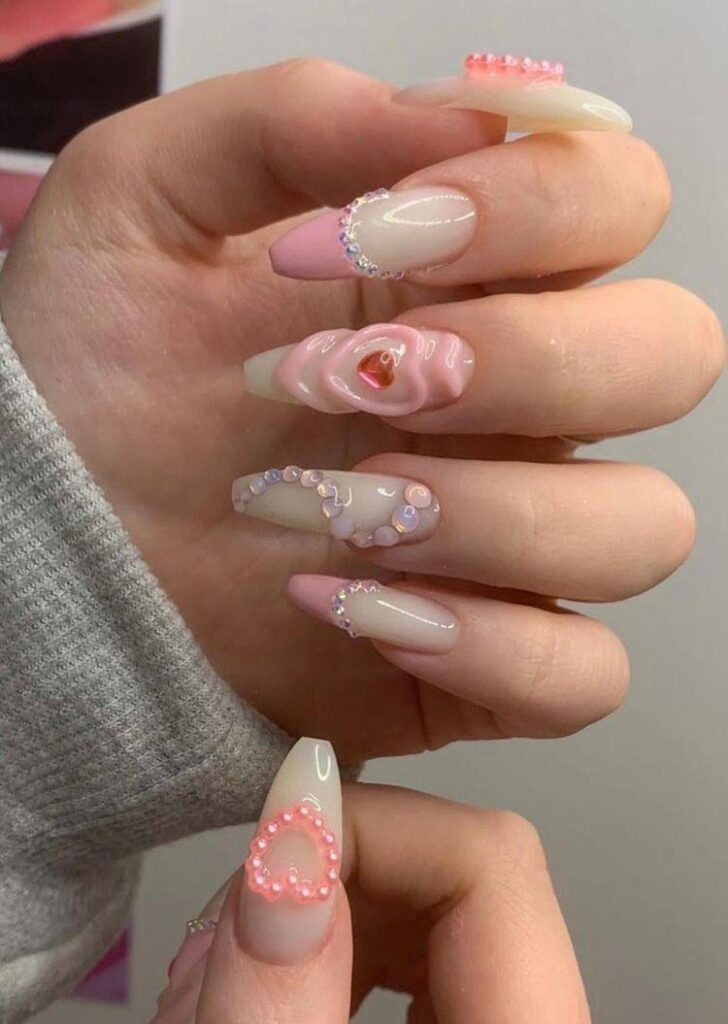
Once the jelly base is cured and smoothed, the focus shifts to the 3D elements. This is not achieved with standard polish, but with a high-viscosity sculpting gel or a thick builder gel. Using a fine detail brush, you draw organic, sweeping lines across the nail. These lines should be irregular to maintain an effortless, liquid appearance. Because the gel is thick, it holds its shape without leveling out too much, creating a raised relief.
After the sculpted lines are cured, the chrome effect is applied. This is typically done using a fine chrome powder rubbed into the cured gel or by using a specialized silver liquid metal pigment. The result is a mirror-like finish that sits prominently above the sheer surface. The transition between the raised metal and the flat jelly base must be clean, ensuring that the top coat does not inadvertently fill in the grooves of the 3D design, which would dull the sculptural effect.
Curating Shapes and Color Palettes
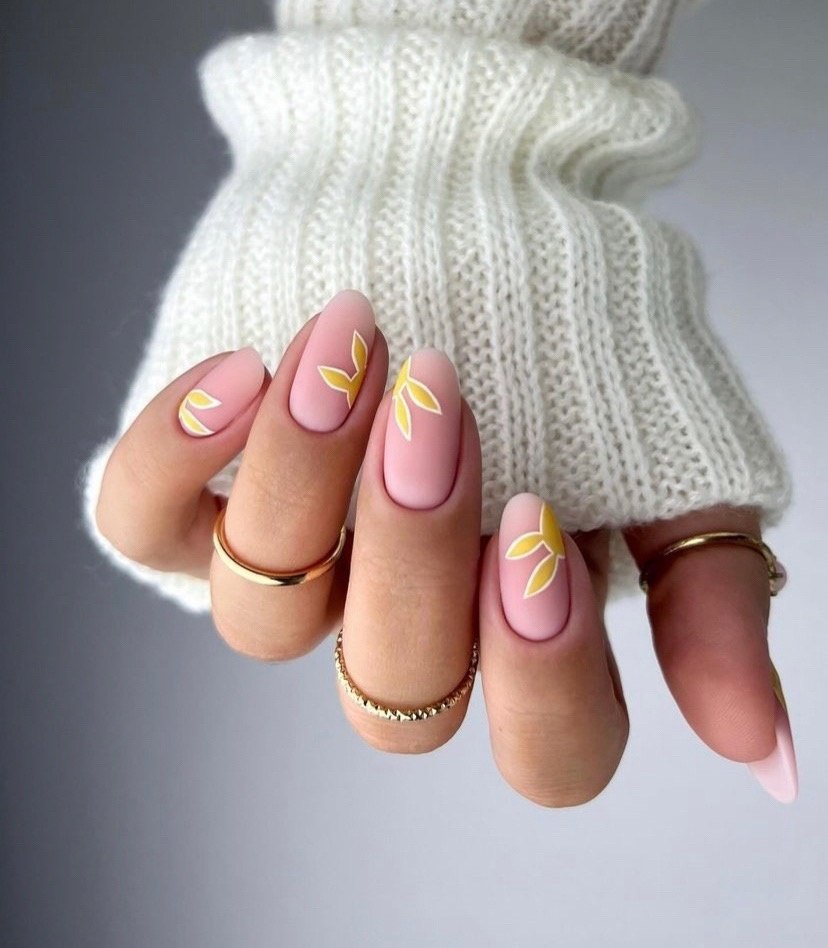
The success of this manicure is heavily dependent on the chosen nail shape and the color temperature of the jelly base. For a modern, high-fashion edge, a tapered square or a long coffin shape provides the necessary canvas for the sweeping chrome lines. These elongated shapes allow for more dramatic, vertical movement in the metalwork, making the fingers appear longer and more refined. For a softer, more romantic approach, an almond shape works effectively, as the curves of the nail complement the fluid motion of the silver swirls.
When selecting your palette, consider your skin’s undertones to ensure the jelly tint feels integrated. Cool-toned individuals may find that a sheer lavender or a pale, icy pink provides a harmonious backdrop for the silver. For warmer undertones, a nude caramel, a soft apricot, or a warm peach base creates a beautiful contrast against the metallic lines. The silver itself acts as a neutral, but its high reflectivity means it will pick up the colors of the jelly base, subtly altering its perceived hue. This technique allows for a level of customization that standard metallic polishes cannot offer.
Occasion Wear and Structural Maintenance
This manicure is uniquely versatile, functioning as a quiet luxury option for professional environments while possessing enough edge for evening wear. In an office setting, a nude or milky jelly base with minimal, thin chrome lines remains understated. For a more formal event, a deeper mauve or a more complex, multi-line chrome arrangement provides a striking, jewelry-like finish.
Maintaining the integrity of 3D chrome requires a specific care regimen. Because the metallic lines are raised, they are more susceptible to catching on delicate fabrics like silk or lace. To mitigate this, ensure your manicurist applies a high-shine, hard top coat that encapsulates the edges of the chrome without flattening the design. At home, the most important ritual is the consistent application of cuticle oil. Keeping the skin around the nail hydrated creates a healthy cuticle oil barrier, which prevents the lifting of the builder gel and keeps the translucent base looking fresh and hydrated. If the chrome begins to lose its luster, a light buffing with a fine buffer can sometimes restore the shine, but generally, the goal is to protect the smooth, glass-like surface from micro-scratches.
The ability to command a look that balances organic softness with industrial edge provides a newfound sense of agency in your personal style. By understanding the technical nuances of jelly bases and sculptural chrome, you move beyond simple color selection into the realm of intentional, artistic expression.