The era of the uniform manicure is yielding to a more complex, curated aesthetic. You no longer need to choose between a soft, romantic floral design and a sharp, avant-garde metallic finish. The current movement in high-end nail artistry embraces the tension between these two extremes through mixed media application. By combining contrasting textures—the delicate translucency of a jelly base, the organic fragility of dried botanicals, and the heavy, reflective weight of 3D chrome—you create a visual narrative that is far more interesting than a single-color polish.
The Mixed Media Aesthetic
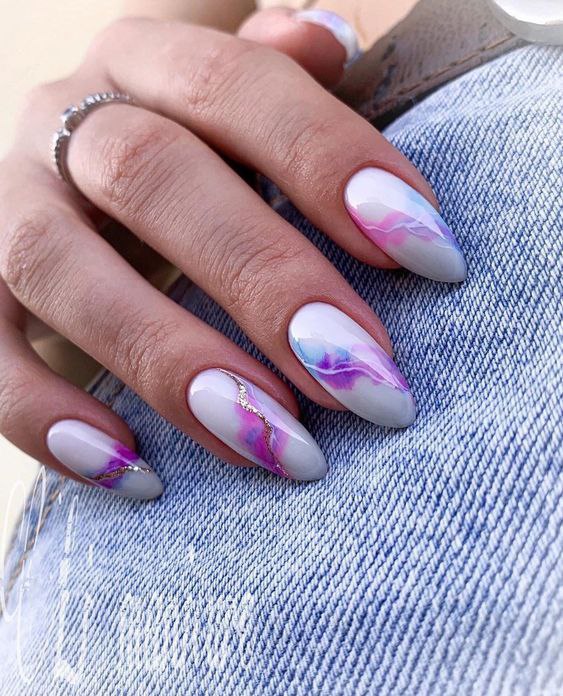
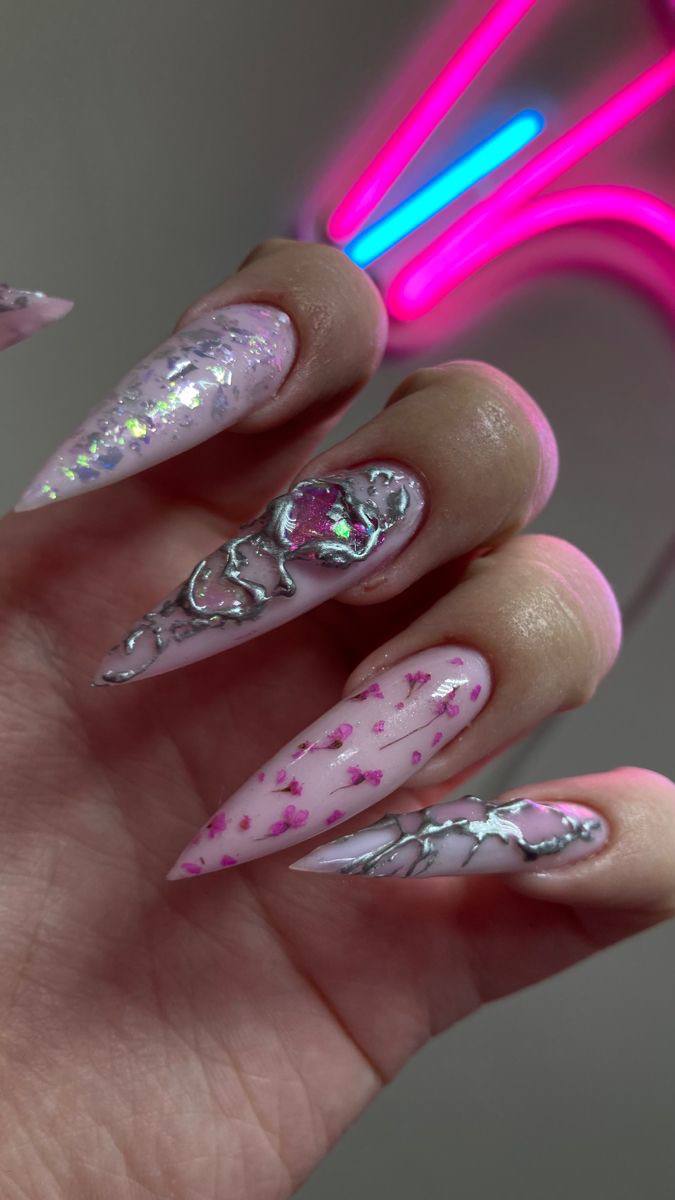
This style relies on the concept of intentional mismatching. Instead of a repeating pattern across all ten fingers, you select a theme that allows for individual variation. In a typical set, you might feature one nail with iridescent flakes embedded in a milky base, another with sculptural silver elements, and a third with pressed flower accents. This approach mimics the way high-fashion accessories are layered, moving away from the “matching set” mentality toward something that feels collected and bespoke. The key is to maintain a cohesive color temperature. Even when the textures vary wildly, keeping the palette within a specific range—such as cool-toned pinks and silver, or warm nudes and gold—ensures the look remains sophisticated rather than chaotic.
Technical Execution and 3D Elements
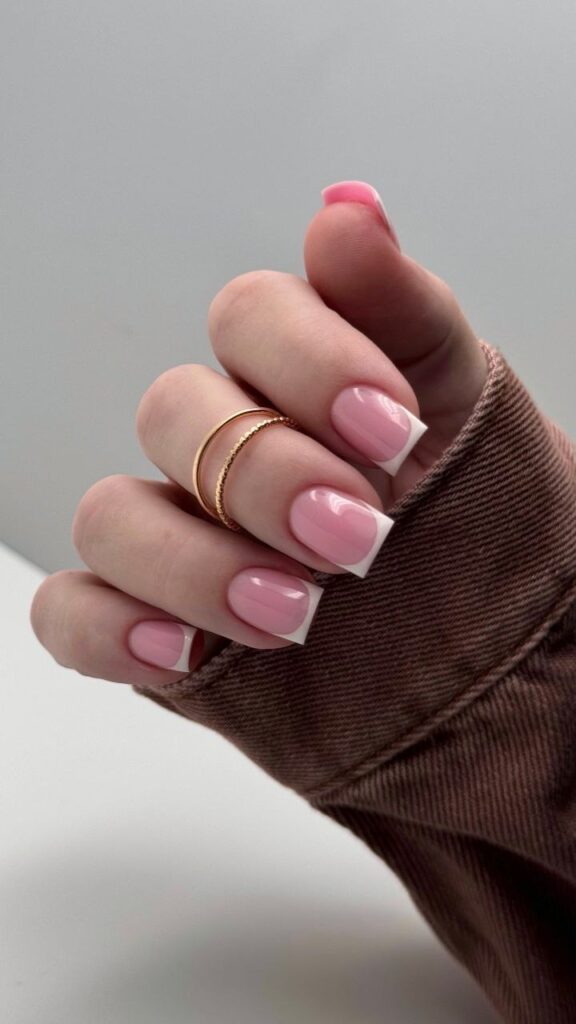
Achieving this look requires a mastery of different viscosities. To begin, you should apply a milky pink jelly base. This provides a semi-translucent canvas that allows light to pass through, adding depth to the manicure. If you are incorporating dried flowers, place the botanical elements onto a tacky layer of top coat before curing. This embeds them within the nail structure, preventing them from peeling.
The most technical aspect is the creation of the 3D metallic accents. To replicate the molten silver effect seen in contemporary editorial looks, you need a high-viscosity builder gel or a specialized 3D silver gel paint. Using a fine liner brush, drag the gel into organic, liquid-like shapes across the nail surface. Unlike traditional chrome powder, which is rubbed over a smooth surface to create a flat mirror finish, using a thick gel allows you to build actual height and dimension. Once the shape is established, cure it under a UV or LED lamp. For a truly high-end finish, you can apply a thin layer of clear builder gel over the 3D elements to smooth out any jagged edges, though many prefer leaving them slightly irregular to enhance the “molten” aesthetic.
Shape and Color Theory
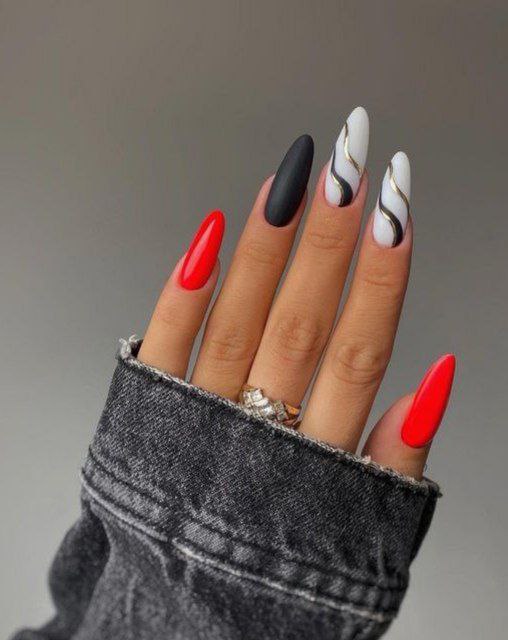
The stiletto shape is the most effective silhouette for this specific style of art. The dramatic, tapered point provides an elongated canvas that accommodates both the sprawling 3D silver lines and the delicate placement of floral elements. However, length requires structural integrity. When working with stiletto shapes, your apex placement is critical. The apex—the thickest part of the nail enhancement—must be positioned correctly to support the weight of the 3D art and the length of the tip. Without a strong apex, the nail becomes prone to snapping, especially when the design includes heavy metallic textures.
When pairing colors, consider the interplay of light. Iridescent flakes react to movement, catching the light at different angles, which provides a soft contrast to the hard, singular reflection of chrome. If you find the silver too harsh, you can transition to a rose gold or a brushed pewter to soften the visual impact. The goal is to play with how light interacts with each specific texture on your hand.
Preservation and Aftercare
Because mixed media nails involve varying heights and textures, maintenance requires a specific routine to prevent snagging or chipping. The 3D elements are the most vulnerable points of the manicure. You should avoid using your nails as tools for tasks like opening containers or peeling labels, as the leverage of a stiletto shape combined with the protrusion of the chrome can cause the art to lift.
To maintain the health of the natural nail beneath the enhancement, a consistent cuticle oil barrier is necessary. Apply oil twice daily, focusing on the area where the enhancement meets the eponychium. This keeps the surrounding skin supple and prevents the lifting that often occurs when the nail plate becomes overly dry. If you are performing these applications at home, ensure your curing times are precise; under-curing a thick 3D gel can lead to internal instability, causing the design to crack or peel prematurely.
Refining your manicure through these technical layers allows you to move beyond simple color choice and into the realm of true personal expression. By mastering the balance of texture, shape, and light, you transform a standard grooming ritual into a sophisticated piece of wearable art.