Mastering the Malachite Marble Aesthetic
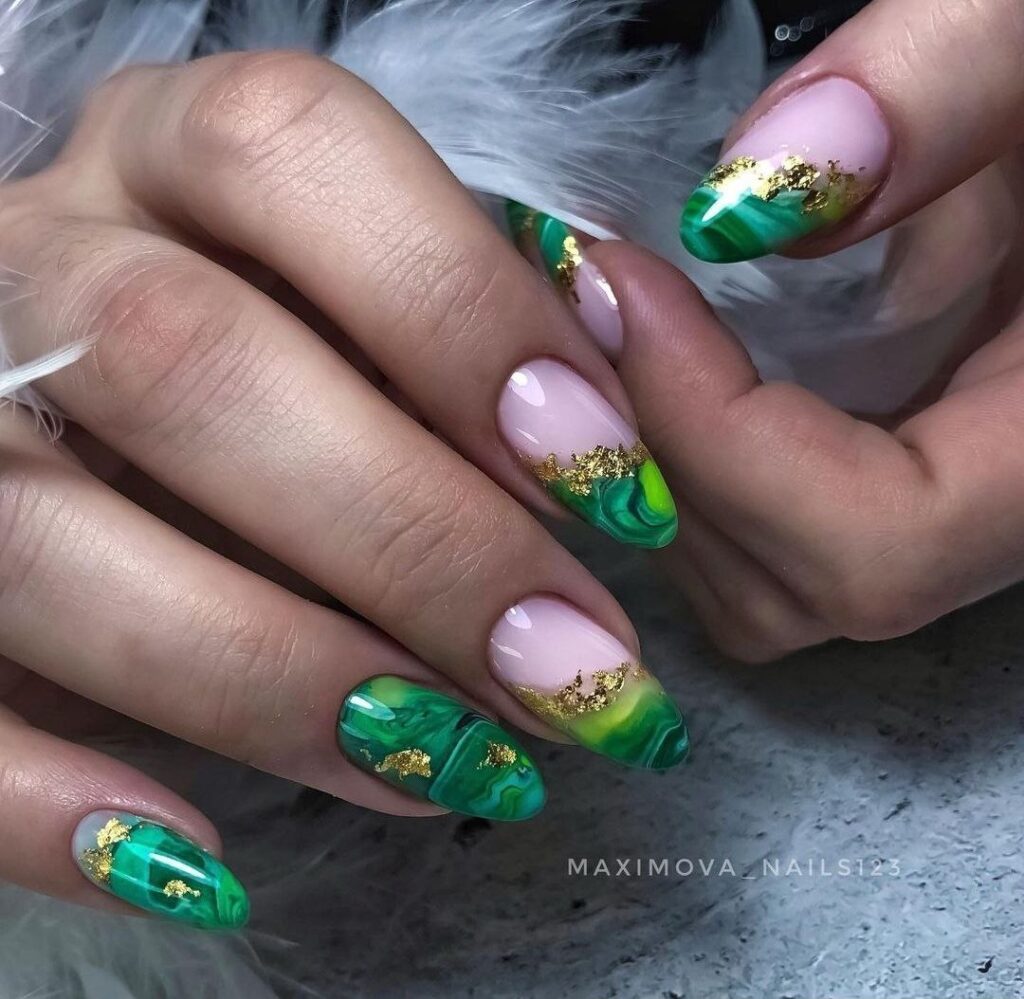
The visual complexity of malachite, a mineral defined by its swirling bands of deep forest green and pale jade, offers a sophisticated alternative to the standard monochromatic manicure. Unlike a flat, single-tone application, a malachite-inspired design utilizes light and translucency to mimic the organic depth of natural stone. This aesthetic relies on the interplay between opaque, saturated pigments and semi-translucent jelly tones, creating a look that feels substantial and intentional rather than merely decorative.
The Visual Language of Malachite
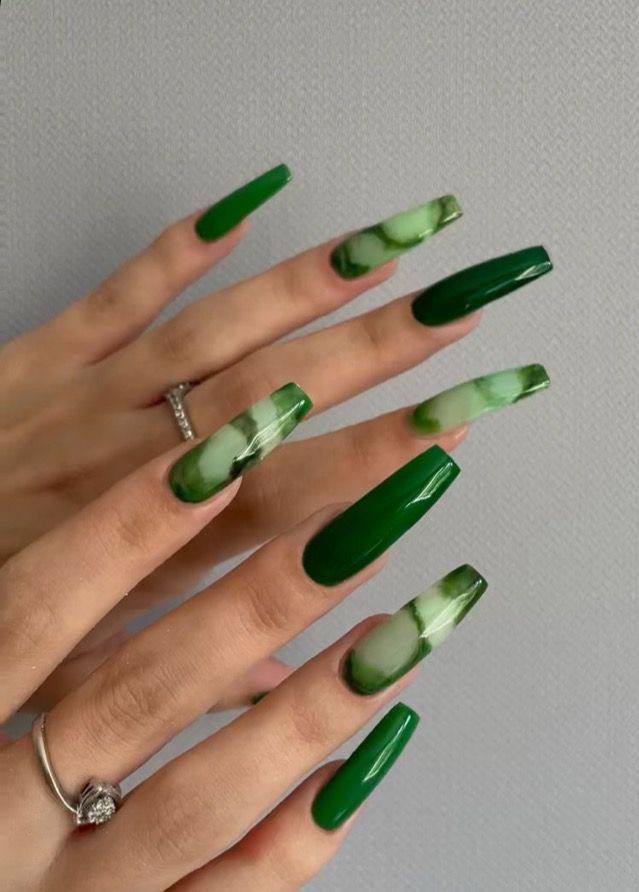
To achieve this look, you are working with a specific color theory centered on tonal variation. The goal is to replicate the variegated patterns found in polished gemstone. This involves a palette of at least three distinct shades: a deep, nearly black forest green; a vibrant emerald; and a milky, semi-sheer mint or jade.
The distinction between a standard green manicure and a malachite marble design lies in the perceived depth. In a traditional manicure, light hits the surface and reflects immediately off the pigment. In a marble design, the layering of jelly polishes allows light to penetrate through the translucent layers before reflecting, giving the nails a three-dimensional quality. This mimics the way light interacts with a real mineral, providing a sense of weight and luxury to the nail architecture.
Achieving the Marble Effect Through Layering
Whether you are working with a professional technician or attempting a high-level DIY application, the technique requires patience and a steady hand. If you are at a salon, you can request a “jelly marble” technique using gel polishes.
Begin with a milky, off-white or pale jade base coat. This serves as the foundation that will allow the subsequent colors to appear suspended within the nail. Once the base is cured, you will use a fine-tipped liner brush to introduce the darker pigments. Instead of painting solid blocks of color, you will apply thin, irregular streaks of forest green and emerald.
The key to avoiding a muddy or messy appearance is controlled blending. Use a clean brush slightly dampened with a cleanser or a mixing medium to softly blur the edges of your pigment streaks. You want to create soft gradients rather than sharp lines. Avoid over-working the product; if you blend too much, the distinct mineral bands will disappear, leaving you with a generic green smudge. To finish, a thick layer of high-gloss top coat is necessary to provide that glass-like, polished stone finish.
Structural Integrity and Shape Selection
The malachite design is most impactful when paired with a substantial canvas. The coffin shape—characterized by its long, tapered sides and squared-off tip—is the most effective silhouette for this pattern. The elongated surface area of a coffin nail provides the necessary room for the marble veins to travel without becoming cluttered.
When opting for this length, the technical construction of the nail is paramount. Ensure your technician focuses on proper apex placement. The apex is the highest point of the nail’s curve, which provides the structural strength needed to prevent breakage in longer extensions. A well-placed apex ensures that the nail can withstand daily wear while maintaining a sleek, natural-looking profile. If you prefer a shorter length, a squoval shape offers a similar modern edge while remaining more practical for high-activity lifestyles.
Styling and Occasion Wear
Because of its rich, organic tones, malachite marble is highly versatile. For a formal setting, the deep greens pair exceptionally well with yellow gold jewelry, which highlights the warmth within the emerald pigments. The contrast between the cool green tones and the metallic gold creates a look that feels curated and high-end.
For a more contemporary, minimalist approach, consider pairing the nails with silver or white gold. This leans into the cooler, more stone-like qualities of the design. In terms of wardrobe, these nails act as a neutral when paired with cream, charcoal, or black, providing a subtle pop of color that does not overwhelm a monochromatic outfit. The design is sophisticated enough for professional environments but carries enough character for evening events.
Maintaining the High-Gloss Finish
The longevity of a marble design depends heavily on the health of the surrounding skin and the integrity of the top coat. Because the aesthetic relies on a glass-like shine, any micro-scratches in the top coat will diminish the illusion of gemstone depth.
To preserve the look, prioritize a consistent cuticle oil regimen. Applying oil daily creates a cuticle oil barrier that keeps the skin hydrated and prevents the polish from lifting at the edges. Furthermore, avoid using your nails as tools for opening packages or scraping surfaces, as this can cause chipping in the delicate marbled layers. Regular salon maintenance every two to three weeks will ensure the apex remains strong and the high-gloss finish stays reflective.
By focusing on the technical nuances of pigment layering and structural shape, you transform a simple manicure into a piece of wearable art. Knowledge of these specific textures and application methods allows you to command the aesthetic with precision.