Try the Matte Botanical Trend for the Softest Spring Manicure
A quiet, garden-inspired look for your fingertips.
There is a specific kind of stillness that arrives in the early morning of a spring weekend. You find yourself sitting on a porch, perhaps wrapped in a heavy linen throw, watching the light change from a bruised purple to a pale, translucent gold. The air carries the scent of damp earth and the faint, sweet promise of blooming jasmine. It is a moment defined by texture: the grain of the wooden table, the coolness of a ceramic mug, and the soft, blurred edges of the garden waking up around you.
While you might not be sitting in a sun-drenched conservatory every morning, you can certainly carry that sense of organic calm with you. The current shift toward softer, more tactile aesthetics suggests that we are moving away from the loud and the hyper-reflective, looking instead for something that feels more grounded. This season, that quietude is finding its way to our hands through the matte botanical manicure.
What Are Matte Botanical Nails?
Matte botanical nails are defined by a lack of shine and a focus on organic, fine-line imagery. Instead of the high-gloss, glass-like finish that has dominated recent seasons, this look utilizes a matte top coat to create a velvet-like surface that absorbs light rather than reflecting it. The color palette is almost always composed of desaturated pastels—think dusty rose, muted lilac, or sage green—which serve as a soft canvas for botanical details. These details are typically rendered in fine, thin lines, mimicking the delicate stems, tiny petals, or even the veins of a leaf, creating a look that feels more like a piece of hand-drawn stationery than a traditional manicure.
Behind the Trend
For the past year, the beauty landscape has been defined by high-octane finishes. We saw the rise of chrome powders that mimicked liquid metal and jelly polishes that looked like poured candy. While those trends were undeniably striking, they often felt digital and artificial. The move toward matte botanical art represents a collective exhale. It is a pivot toward “quiet luxury” in the nail space, prioritizing subtlety and a connection to the natural world over sheer visibility.
This trend sits in direct contrast to the maximalist, neon-heavy styles of previous summers. Where a chrome nail demands attention through light and flash, a matte botanical nail invites a closer look. There is also a deep sense of nostalgia at play here, reminiscent of the pressed flowers found in old library books or the delicate watercolor illustrations in vintage botanical guides. It taps into a desire for something that feels handmade and personal, offering a sense of calm in a season that can often feel rushed.
How to Get Matte Botanical Nails
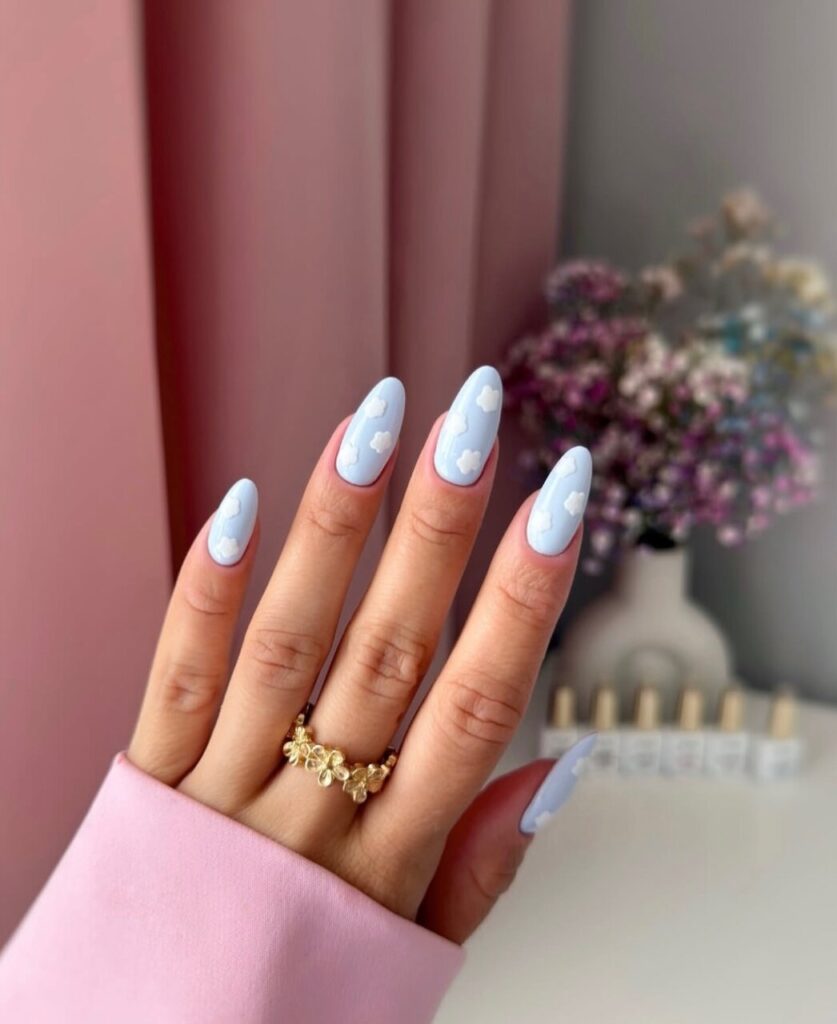
Achieving this look requires a focus on precision and a careful approach to layering. To begin, you will want to select a pastel cream polish. It is important to choose a shade with high opacity so that you do not need multiple thick layers, which can lead to a heavy, unnatural feeling on the nail. Start with a clean, well-shaped nail—an almond or oval shape works best here, as the tapered points mimic the natural curves of flower petals and stems. Apply your chosen pastel color in two thin, even layers. This builds a smooth, consistent base that is essential for the matte finish to look intentional rather than patchy.
Once your base color is completely dry, the artistry begins. You will need a very fine liner brush, the kind used for detailed sketching. Rather than attempting large, sweeping floral patterns, focus on small, organic shapes. Use a slightly darker shade of your base color, or perhaps a deep forest green or a muted plum, to paint tiny, spindly stems or miniature blossoms. A useful tip for maintaining a natural look is to avoid perfect symmetry; real plants grow in slightly irregular, wandering lines. If you want to add a bit of dimension, you can use a dotting tool to add tiny, bright highlights to the centers of your flowers, but keep these sparse to maintain the soft aesthetic.
The final, and most critical, step is the application of a matte top coat. This is what transforms a standard manicure into the botanical trend. Apply the matte top coat in a single, even layer over the entire nail, including your artwork. The matte finish will slightly dull the colors of your botanical details, which is exactly what you want—it helps the art sink into the nail rather than sitting harshly on top of it. This creates that sought-after velvet texture that feels soft to the touch and visually soothing. If you find the matte finish makes your colors look too flat, you can try applying a thin layer of a standard top coat over your art before the matte layer, though two thin coats of the pastel base usually provide enough depth.
If you want to take this look into the later months of the season, consider a slightly moodier variation. Instead of the pale lavenders and pinks, try using a deep, muted terracotta or a dusty navy as your base, and use gold-toned metallic polish for the botanical linework. This maintains the organic, hand-drawn feel while transitioning more seamlessly into the richer tones of late summer and early autumn.