The Fluidity of Abstract Swirl Nail Art
There is a specific kind of kinetic energy found in a well-executed swirl manicure. Unlike the rigid, mathematical precision required for a micro-french or a sharp geometric pattern, abstract swirls rely on the illusion of movement. When you look at a hand adorned with these organic, curving lines, your eye doesn’t rest on a single point; it follows the trajectory of the pigment as it winds around the nail bed. This aesthetic moves away from the constraints of symmetry, favoring a look that feels as though the color was captured mid-motion. Whether you are sitting in a salon chair or working at your own vanity, understanding the physics of these curves is what separates a messy application from a high-end editorial finish.
Defining the Kinetic Aesthetic
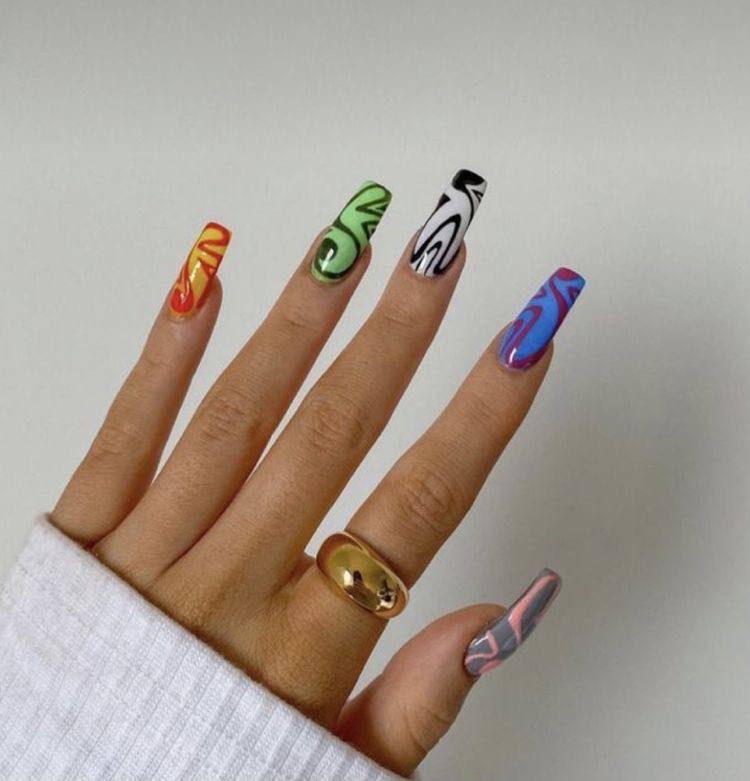
Abstract swirl nail art is characterized by its lack of a fixed structure. Instead of repeating a single motif, each nail acts as a standalone canvas, often utilizing a different colorway or a different direction of flow. The goal is to create a sense of depth, often achieved through the use of high-viscosity gel paints or jelly polishes that allow for subtle layering.
In high-end nail design, this look often plays with the concept of negative space. You do not need to coat the entire nail in pigment to achieve the effect. In many cases, leaving parts of the natural nail or a sheer, nude base visible allows the saturated pigments to appear more striking. This contrast creates a sense of lightness, preventing the bold colors from feeling heavy or overwhelming the hand. The movement should feel intentional, following the natural arc of your nail’s growth to elongate the fingers.
Mastering the Liner Brush and Gel Viscosity
To replicate this look at home, you must move beyond the standard wide brush found in most polish bottles. The primary tool for success is a long, slender liner brush, ideally with synthetic hairs that provide enough tension to pull the pigment without it splaying. The technical difficulty lies in managing the viscosity of your medium.
If you are using a standard lacquer, you may find the drying time too rapid to manipulate the curves, leading to jagged lines. For a more professional result, gel paint is the preferred medium. Because gel does not dry until it is cured under a lamp, you have the freedom to manipulate the stroke. When you begin your design, load a minimal amount of pigment onto the tip of the liner brush. Instead of pressing down hard, which can create thick, uneven ridges, use a light, sweeping motion. Think of the brush as a conductor’s baton, pulling the color across the surface.
A critical technique to prevent your swirls from bleeding into one another or losing their shape is the flash cure. Once you have placed a line that you are satisfied with, immediately place your hand under a UV or LED lamp for five to ten seconds. This partially sets the pigment in place, providing a stable foundation for the next layer of color. This prevents the colors from mixing into a muddy gradient and keeps the boundaries of your swirls crisp.
Pairing Pigment with Nail Architecture
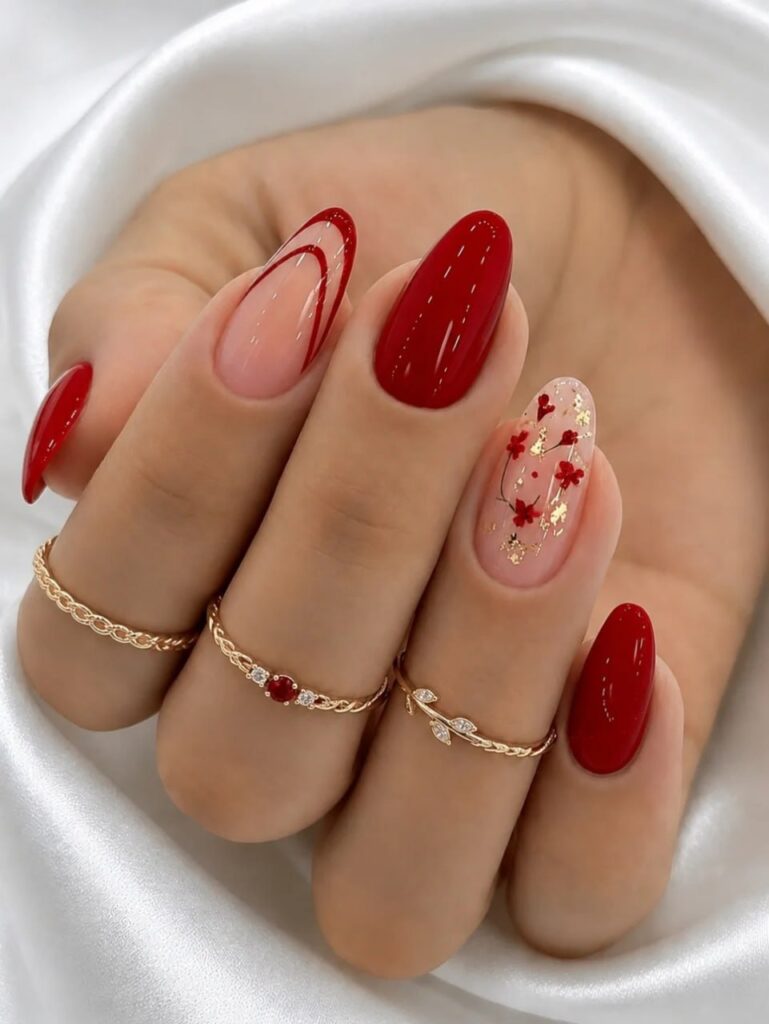
The shape of your nail dictates how the swirl will behave visually. While almond shapes provide a natural, elongated canvas that complements the curves, the squoval shape offers a more modern, architectural backdrop. A squoval nail, with its soft edges and flat tip, provides a structured frame that prevents the organic swirls from looking too chaotic.
When selecting your color palette, consider the tension between warmth and coolness. As seen in contemporary trends, pairing a cobalt blue with a bright tangerine or a lime green with a deep violet creates a high-contrast visual that feels deliberate. If you prefer a more subtle approach, look for tonal variations within the same color family—for example, a pale lavender swirl over a deep plum base.
For those seeking a tactile experience, consider the finish. A high-gloss top coat over a jelly-based swirl creates a glass-like appearance, making the colors look as though they are suspended within the nail. Conversely, applying a matte top coat over a high-pigment swirl can give the design a velvet-like texture, muting the brightness and making the color appear more dense and saturated.
Ensuring Structural Integrity and Longevity
A sophisticated manicure is as much about the health of the underlying nail as it is about the art on top. Because swirl designs often involve multiple layers of gel, the thickness of the product can affect the strength of the nail. To prevent breakage, ensure your technician—or yourself—pays close attention to apex placement. The apex is the highest point of the nail’s curvature, typically located just past the midpoint of the nail bed. Proper apex placement distributes the weight of the product and provides the structural support necessary to prevent snapping, especially on longer extensions.
Maintenance is the final step in preserving the aesthetic. The edges of the nail are most prone to lifting, especially when dealing with intricate art. To maintain a healthy nail bed, establish a daily cuticle oil barrier. Applying oil not only keeps the surrounding skin hydrated but also prevents the natural oils from your skin from migrating under the edges of the gel, which can lead to premature lifting.
When you approach your next manicure with this technical understanding, you are no longer just choosing a color; you are directing a visual narrative. Whether you choose a high-contrast primary palette or a subtle, tonal gradient, the ability to control the flow and structure of your design ensures a result that is as resilient as it is striking.