Try the Butter Yellow Nail Trend for the Sunniest Spring Manicure
A soft glow we’ll be wearing all season.
The morning air carries a sharp, damp scent of waking earth and crushed grass. You are sitting on a porch in a heavy linen shirt, the fabric slightly coarse against your skin, watching the light shift from a pale, watery grey to a warm, honeyed gold. There is a plate of sourdough toast on the table, a thick slab of salted butter melting into the porous holes of the bread, while a single primrose leans toward the sun in a terracotta pot nearby. Everything feels slow, hushed, and quietly optimistic.
You are likely not sitting on a breezy porch in the countryside at this exact moment, but you can carry that specific, soft warmth with you through the workday and the weekend. The ease of a slow spring morning can be translated directly onto your fingertips with a manicure that feels less like a statement and more like a mood.
What Are Butter Yellow Nails?
Butter yellow nails are defined by a specific, desaturated hue that sits exactly between a pale pastel and a rich cream. Unlike the neon yellows of summer or the sharp chartreuse of high-fashion runways, this shade is opaque and muted, mimicking the color of softened dairy or a pale custard. The finish is typically a high-gloss shine that gives the nail a smooth, porcelain-like appearance, though it can also be worn with a velvet-matte finish to lean into a more organic, suede-like texture.
Behind the Trend
This shift toward butter yellow comes as a reaction to the high-contrast trends of previous years. For a long time, the nail world was split between the hyper-natural, sheer pinks of the clean-girl aesthetic and the bold, saturated depths of cherry red or midnight blue. Butter yellow offers a middle ground. It provides the visual interest of a color while maintaining the neutrality of a nude. It functions as a neutral that doesn’t disappear into the skin, offering a brightness that feels intentional but not aggressive.
There is also a distinct nostalgic pull here. The shade evokes a certain 1990s minimalism—think of the slip dresses and muted palettes of early decade cinema—but it is updated for a modern sensibility. While the glazed donut trend focused on an iridescent, almost metallic shimmer, butter yellow is about pigment and saturation. It feels grounded and tactile. It resonates now because it mirrors a collective desire for softness and a return to a slower, more domestic kind of luxury.
How to Get Butter Yellow Nails
Achieving this look requires a focus on pigment density and surface smoothness. Begin with a high-quality base coat. This is a non-negotiable step for yellow pigments, which can sometimes leave a slight stain on the natural nail plate if applied directly. A clear base coat creates a barrier that ensures a clean removal later on.
For the color, look for a creamy lacquer or a gel polish categorized as a pale yellow or custard. The key to the butter effect is avoiding any shimmer or pearlescent particles; you want a flat, solid cream finish. Apply the first coat in thin, sweeping motions, starting from the center of the nail and pushing slightly toward the cuticle before pulling toward the tip. Resist the urge to overload the brush, as yellow can sometimes streak if the layer is too thick.
Allow the first layer to dry completely before applying a second coat. Two thin coats read more true-to-trend than three going for full opacity, as excessive layers can make the nail look bulky or “plastic.” The goal is a finish that looks like a dip in cream. Once the color is set, seal the look with a high-shine top coat. A plump, gel-effect top coat is the best choice here, as it adds a reflective quality that mimics the look of polished stone or glazed ceramic, enhancing the luminosity of the yellow.
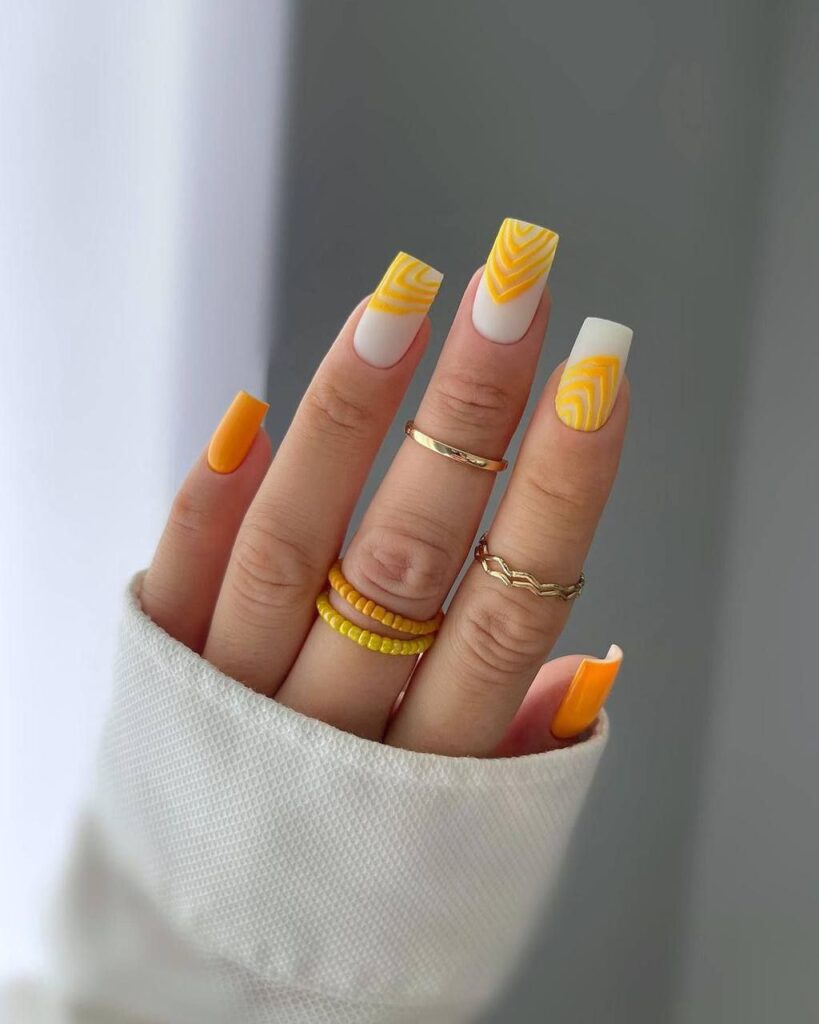
If you prefer a more understated, modern vibe, swap the high-shine finish for a matte top coat. This removes the reflection and turns the color into a soft, chalky yellow that looks particularly sophisticated on shorter, square-shaped nails.
To take the look a step further, you can introduce a subtle contrast. A single accent nail in a deep cobalt blue or a soft sage green creates a sophisticated color block that remains within the springtime palette. For those who want a bit of detail, a tiny, hand-painted white daisy at the base of the ring finger adds a playful, garden-inspired touch without overwhelming the minimalist appeal of the yellow.