Try the Cobalt Porcelain Nail Trend for the Most Refined Summer Manicure
A subtle nod to Mediterranean artistry.
There is a specific kind of stillness found in a sun-drenched kitchen in mid-July. It is the feeling of cool marble beneath your palms, the rhythmic sound of an ice cube shifting in a glass, and the way the light catches the glaze of a heavy ceramic bowl on the table. Everything feels weighted, intentional, and quiet. The colors are never loud; they are simply there, resting in the balance of white clay and deep, ink-like pigments.
You may not be sitting in a seaside villa or a quiet courtyard right now, but that sense of curated, calm artistry can be carried with you quite easily. It turns out that the quiet elegance of fine stoneware has migrated from the dining table to the fingertips. If you are looking for a way to introduce color without overwhelming your seasonal wardrobe, this particular aesthetic offers a way to do just that.
What Are Cobalt Porcelain Nails?
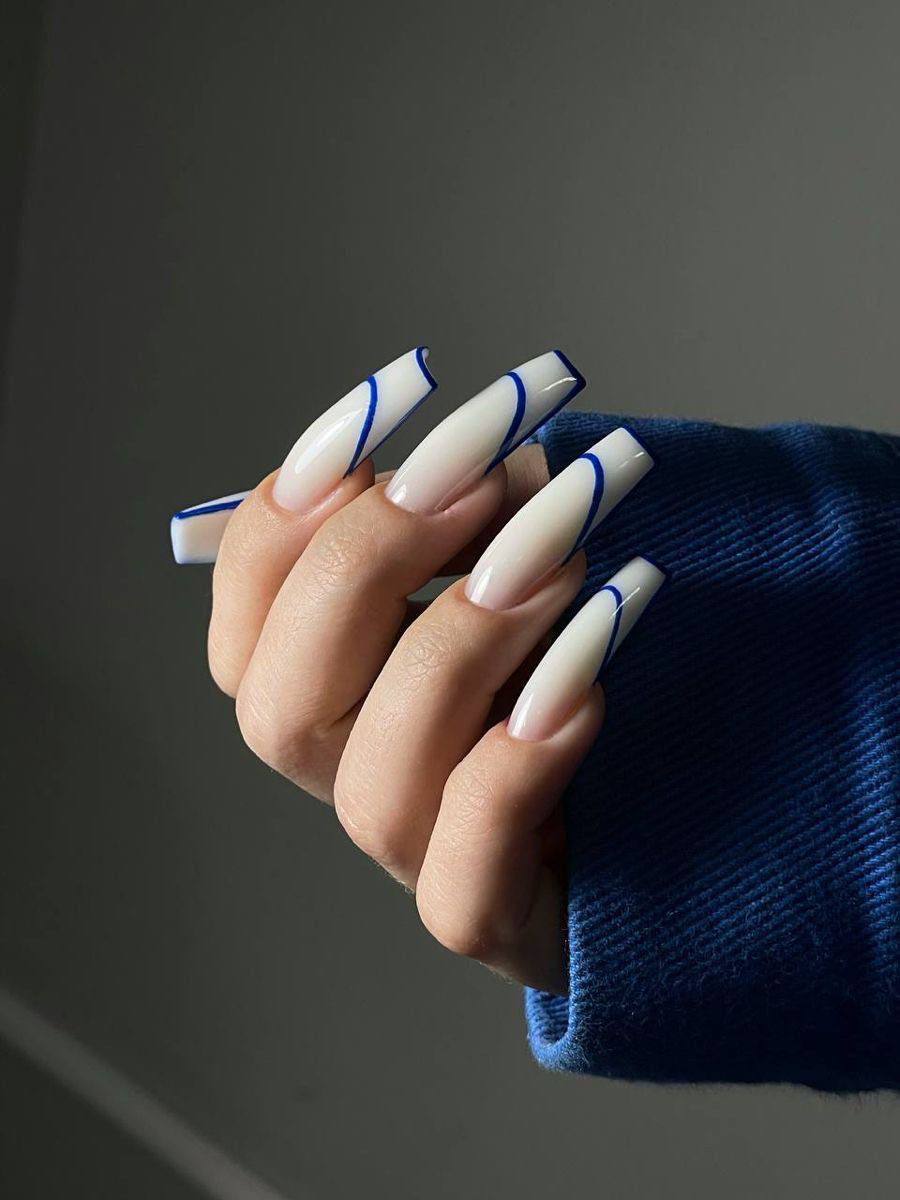
Cobalt porcelain nails are defined by a high-contrast, minimalist approach to nail art that mimics the appearance of glazed ceramic. The foundation is never a solid, chalky white; instead, it relies on a milky, semi-translucent base—often achieved with a jelly-style polish or a sheer builder gel—that allows a hint of the natural nail to peek through, creating a sense of depth. The design element consists of fine, precise linework in a saturated cobalt blue. These lines are typically organic and sweeping rather than geometric, resembling the hand-painted patterns found on vintage Mediterranean pottery or delicate fine china. The look is completed with a high-gloss, glass-like top coat that mimics the reflective surface of a freshly glazed plate.
Behind the Trend
We are currently seeing a subtle shift in the landscape of manicure trends. For the past several seasons, the focus has leaned heavily toward the “clean girl” aesthetic—ultra-sheer, nearly invisible nudes, or the shimmering, pearlescent finish of the glazed donut trend. While those looks remain staples, there is a growing desire for something with more character and a sense of history. Cobalt porcelain nails occupy the space between that minimalism and the more chaotic, maximalist trends like heavy 3D charms or bright, neon aura nails. It is a way to participate in a trend that feels artistic and intentional rather than loud or temporary.
There is also a heavy dose of nostalgia at play here. The aesthetic draws on a collective appreciation for the tactile, artisanal quality of handmade goods. In an era of rapid digital consumption, there is something grounding about a visual language that references old-world craftsmanship—the kind of patterns that feel like they were painted by hand in a small studio. It connects the wearer to a feeling of slow living and the quiet luxury of a well-set table, making the manicure feel less like a fashion statement and more like a personal accessory of refinement.
How to Get Cobalt Porcelain Nails
Achieving this look requires a focus on depth and precision, as the “porcelain” effect relies entirely on how light interacts with the layers of polish. You should begin with a clean, well-prepped nail surface to ensure the base remains smooth and free of any imperfections. Rather than reaching for an opaque white polish, which can look flat and plastic, choose a sheer, milky-toned gel or a translucent builder gel. Applying two thin layers of a sheer product will build a soft, cloud-like opacity that mimics the look of fine china much more effectively than a single thick coat of heavy pigment.
Once your base is cured and smooth, the artistry begins. You will need a high-pigment cobalt blue gel polish and, most importantly, a very fine-tipped detail brush. The goal is to create lines that feel fluid and rhythmic. Instead of attempting perfect, rigid shapes, allow your hand to move in soft, sweeping arcs that follow the natural curve of your nail bed. If you find the lines are becoming too thick, do not try to fix them with more color; instead, use a clean brush dipped in a bit of cleanser to wipe away the excess before curing. A lighter touch is essential here—think of it as painting a delicate rim on a saucer rather than filling in a shape.
The final and most critical step is the finish. To truly capture the essence of glazed ceramic, the surface must be exceptionally smooth and reflective. Use a high-shine, no-wipe top coat to seal the design. If you want to increase the “depth” of the milky base, you can actually apply a second layer of the sheer base polish over your blue lines before the final top coat. This “sandwiches” the design, making the blue appear as though it is sitting just beneath the surface of the glaze, exactly like a piece of authentic porcelain.
For those who want to take this look a step further, consider adding a tiny touch of gold leaf or a very fine gold metallic line along the very edge of the nail. This mimics the gilded rims found on heirloom tea sets and adds a warm, metallic contrast to the cool blue and white palette, making the manicure feel even more decorative and special for a summer evening event.