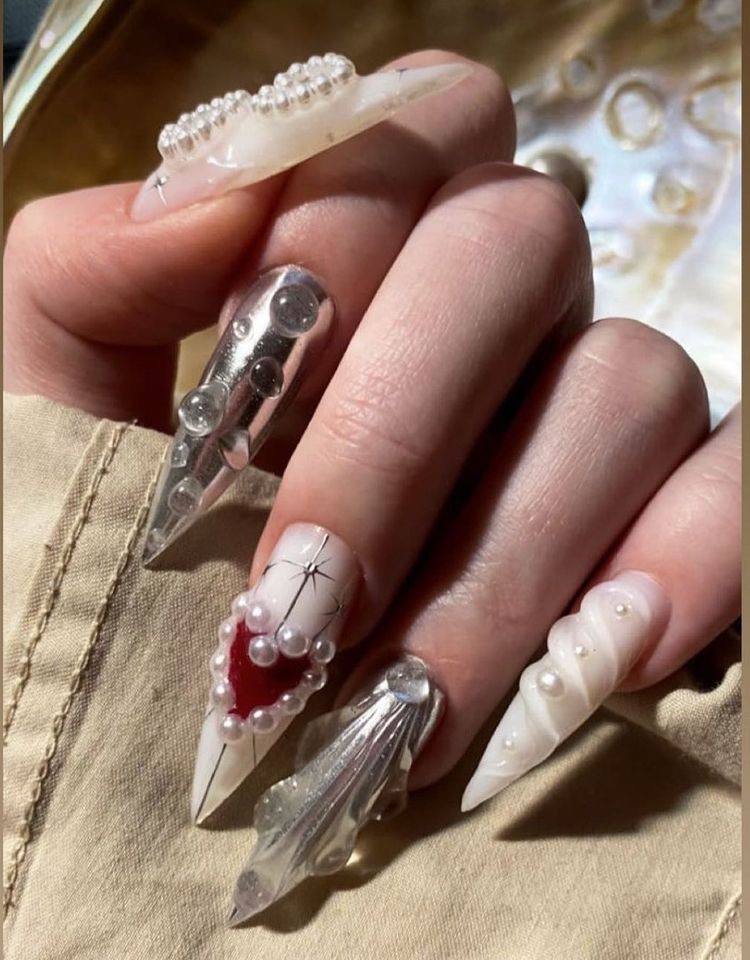
The shift toward architectural dimension in nail artistry has moved past simple line work and into the territory of high-relief textures and mixed-media finishes. While flat color remains a staple for minimalist wardrobes, the current demand for tactile, multi-dimensional manicures reflects a desire for nails that act as wearable sculpture. This particular aesthetic, characterized by the tension between high-shine chrome and soft pearl embellishments, relies on a sophisticated understanding of light refraction and structural balance.
The Visual Language of Mixed Textures
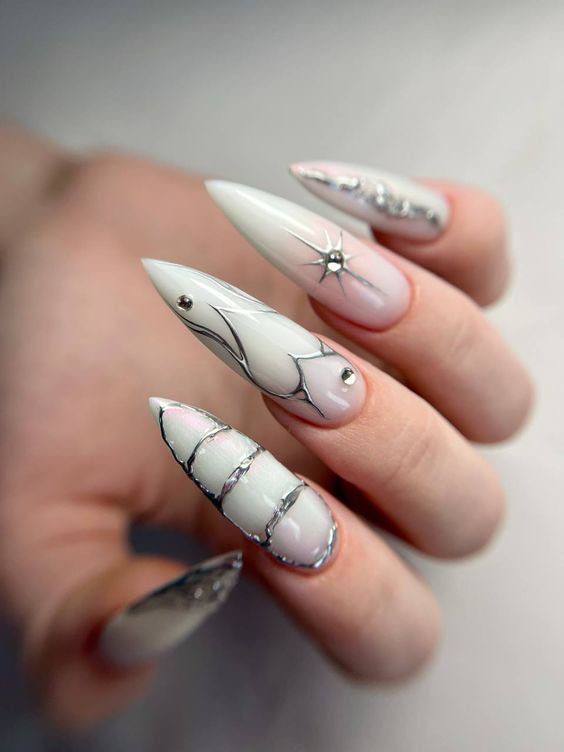
The success of a mixed-texture manicure lies in the contrast between opposing finishes. When you combine a liquid-look chrome with the matte or soft luster of a pearl, you create a visual rhythm that prevents the design from feeling heavy. In a stiletto silhouette, this contrast is even more pronounced. The sharp, tapering lines of the nail provide a dramatic canvas for 3D elements, such as clear builder gel droplets or raised metallic swirls.
The chrome component functions as a focal point of high reflectivity. Whether applied as a fine powder over a non-wipe top coat or used as a thick, pigmented paste, the chrome provides a mirror-like surface that interacts with the environment. This is balanced by the inclusion of pearls, which offer a diffused, milky light. By varying the sizes of the pearls—using tiny micro-pearls for delicate detailing and larger spheres for structural accents—you can direct the eye across the hand, creating a sense of movement that a single-texture manicure lacks.
Technical Execution and Materiality
Achieving this level of detail requires specific products and a controlled application process. If you are working with a professional technician, you can request 3D nail art using high-viscosity builder gel. This gel is thicker than standard soak-off products, allowing you to sculpt “jelly” droplets or raised ridges that hold their shape without leveling out under a UV lamp.
To execute the chrome elements, a base of black or deeply pigmented color is often used to provide depth, though a milky white base can create a more ethereal, pearlescent chrome effect. The powder is rubbed into a cured, non-wipe top coat to ensure the smoothest possible surface. For the 3D droplets seen in contemporary editorial looks, a clear gel is placed strategically on the nail and cured quickly to maintain its spherical or organic shape.
The application of pearls requires a different approach to ensure longevity. Rather than simply placing them on top of a final top coat, pearls should be embedded into a layer of builder gel or a specialized jewelry gel. This ensures that the embellishments are anchored to the nail plate and will not snag on fabric. If you are attempting this at home, focus on a small, precise brush to place each bead, ensuring the surrounding gel is wiped clean before the final cure to avoid a cloudy finish.
Shape and Structural Proportions
The stiletto shape is the foundation of this specific aesthetic. Because the length is extended toward a point, the structural integrity of the nail is paramount. A technician must prioritize precise apex placement—the highest point of the nail’s curve—to prevent the extension from snapping under pressure. Without a strong apex, the weight of 3D embellishments and the leverage of a long stiletto can lead to lifting or breakage at the stress points.
When selecting colors to accompany this shape, consider the undertones of your skin and your typical wardrobe. A milky, semi-sheer white base provides a neutral ground that allows the chrome and pearls to command attention without clashing. For a more avant-garde approach, pairing a deep oxblood or crimson heart detail with silver chrome creates a high-contrast, editorial look that feels intentional and curated. The goal is to use the shape to frame the art, using the tapering edges to pull the viewer’s gaze toward the intricate textures at the center of the nail.
Longevity and Structural Maintenance
High-relief manicures require more diligent care than a standard gel application. The primary challenge is the increased surface area of the 3D elements, which are more susceptible to catching on hair, knits, or delicate fabrics. To mitigate this, ensure that all 3D gel components are fully encapsulated with a high-quality top coat, leaving only the very peaks of the texture exposed.
Maintenance of the surrounding skin is equally important. Because these manicures are visually dense, any dryness or raggedness around the cuticle will detract from the polished appearance. Daily application of a high-quality cuticle oil is necessary to maintain the skin barrier and keep the nail beds looking hydrated. This is not merely about aesthetics; keeping the skin supple prevents the lifting of the extensions that can occur when the skin pulls away from the artificial nail. If you notice any chipping in the chrome or loosening of a pearl, visit your technician immediately to prevent moisture from getting trapped beneath the design.
You have the vocabulary to navigate your next salon visit with precision, moving beyond vague descriptions to request the specific textures and structural elements that define modern nail artistry. Whether you opt for the high-shine drama of liquid chrome or the soft tactility of pearl accents, your manicure is a deliberate extension of your personal style.