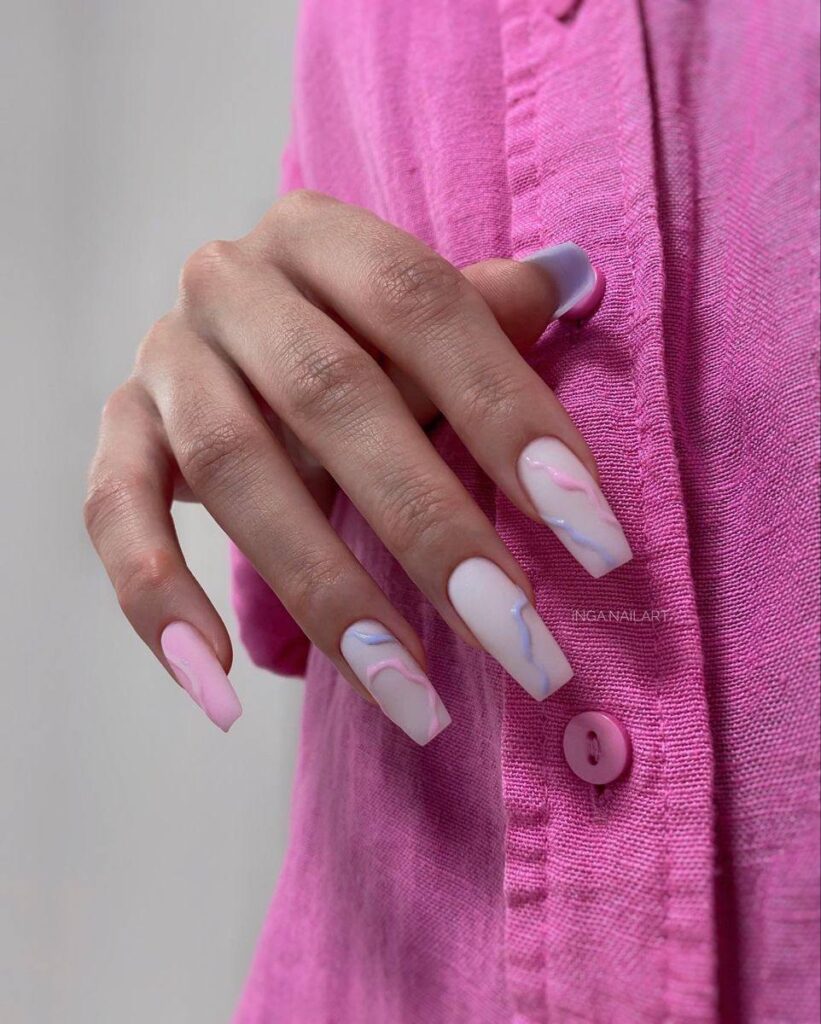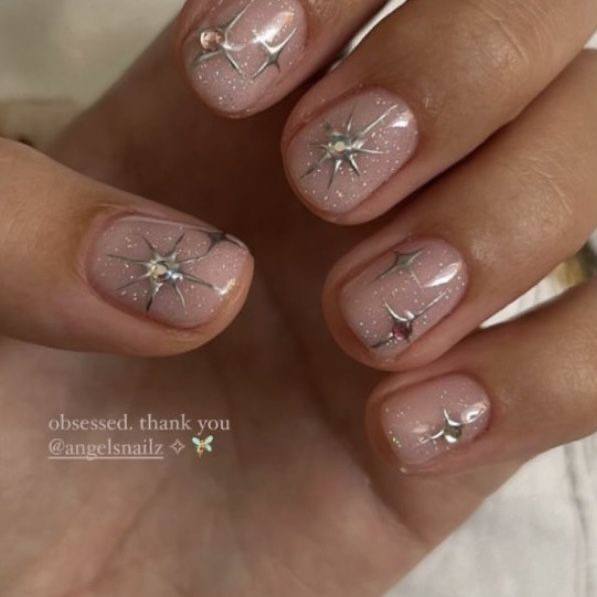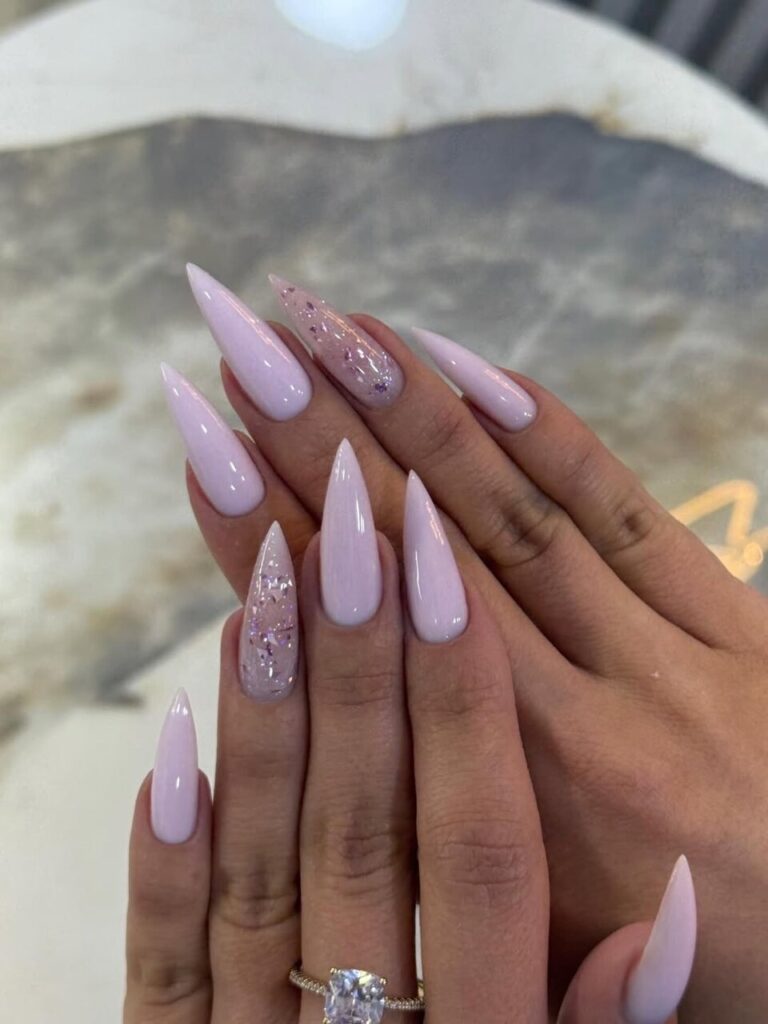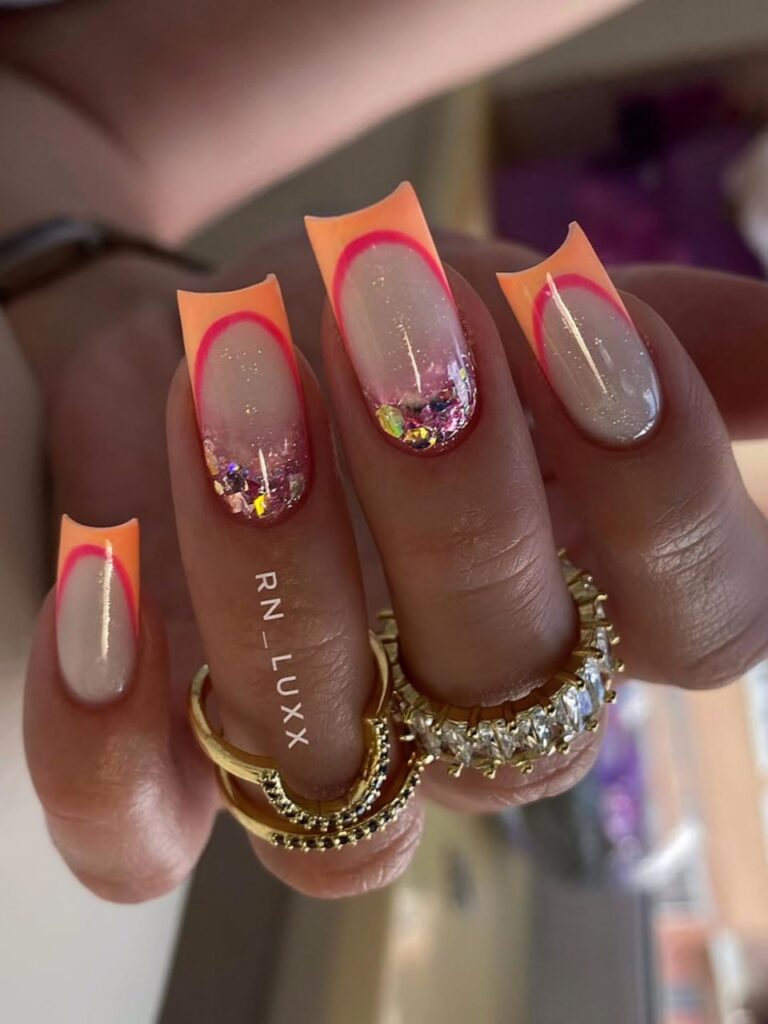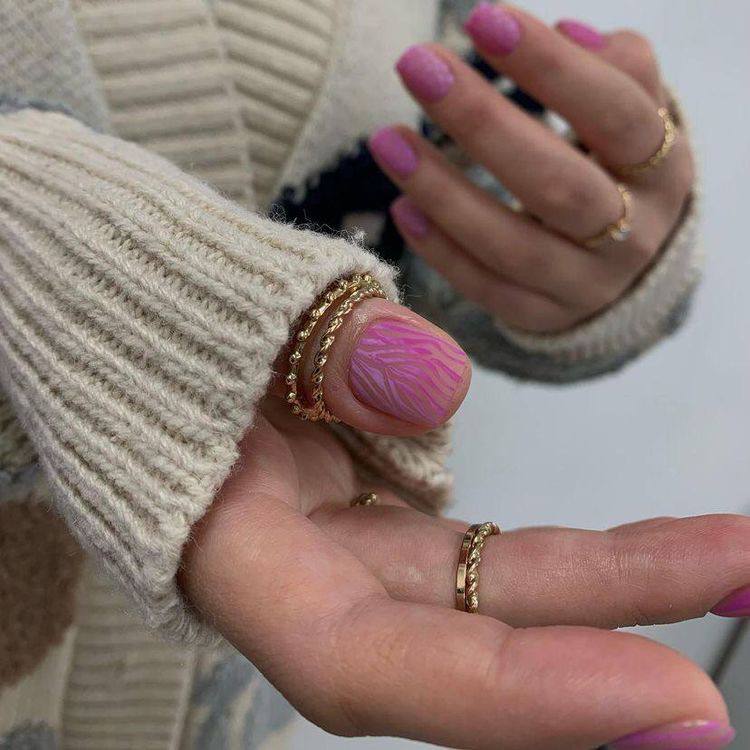
The tactile contrast between a heavy, cream-colored knit and the translucency of a polished nail creates a specific kind of visual quietude. There is a growing movement away from the heavy, opaque pigments that dominated previous seasons, shifting instead toward textures that play with light and depth. The pink marble jelly design is a centerpiece of this transition. It eschews the flat, monochromatic look in favor of something that feels organic, reminiscent of rose quartz or the soft, fluid movements of silk. When you choose this aesthetic, you are not just picking a color; you are choosing a sense of dimension that feels both lived-in and highly intentional.
The Physics of the Jelly Aesthetic
To understand why this look works, you have to look at how light interacts with the nail surface. A standard cream polish sits on top of the nail plate, creating a singular, opaque layer. A jelly polish, however, is formulated with a lower pigment density, allowing light to pass through the color, hit the nail plate, and reflect back out. This creates a sense of three-dimensionality. When you layer a marble pattern within a jelly base, the white or pale pink veining does not sit on the surface like a sticker; instead, it appears suspended within the color. This suspension is what gives the manicure its depth. It mimics the natural patterns found in semi-precious stones, making the nails feel like small, wearable pieces of art rather than simple cosmetic applications.
Technical Execution: The DIY Approach
Achieving this effect at home requires a focus on viscosity and tool precision. You should begin with a clean, well-prepped nail plate, ensuring the cuticle area is clear to prevent the jelly polish from pooling in the proximal nail fold.
Start with a sheer, translucent pink jelly base. Apply two thin coats rather than one thick one; this allows you to build the depth gradually without risking bubbles or uneven curing. Once your base is set, you will need a fine liner brush. This should be a synthetic brush with very long, thin bristles capable of holding a small amount of pigment.
For the marble effect, use a milky white or a very pale peach shade. The key is a wet-on-wet technique if you want a blurred, soft look, or a dry-on-wet technique if you want sharper, more distinct veins. For the soft, organic swirls seen in contemporary trends, dip your liner brush into the lighter shade and, while the pink base is still slightly tacky, sweep the brush in irregular, non-linear paths. Do not attempt to draw perfect lines. The charm of marble lies in its imperfection. Allow the strokes to vary in pressure; a heavier hand creates a thicker vein, while a lighter touch produces a faint, ghostly wisp.
Technical Execution: The Salon Request
If you are heading to a professional, skip the vague descriptions and use technical terminology to ensure your vision is met. Instead of asking for pink marble, request a jelly-base manicure with hand-painted marble veining. Specify that you want the veining to look suspended within the color, not painted on top of a dried surface.
You may also want to discuss apex placement. For a marble design to look high-end, the nail needs a smooth, structured surface. A technician can ensure the strength of the nail is maintained through proper gel application, which provides the necessary canvas for the light-refracting jelly layers. If you are opting for extensions, a soft squoval or a medium almond shape provides the most sophisticated silhouette for this specific pattern.
Structural Synergy: Shape and Hardware
The architecture of your nail dictates how the pattern is perceived. A squoval shape—characterized by a flat tip with rounded corners—offers a modern, clean edge that balances the organic chaos of the marble swirls. This shape is particularly effective for those with shorter nail lengths, as it provides enough surface area for the pattern without looking overly manicured. Alternatively, a medium almond shape can elongate the finger, making the marble effect feel more ethereal and delicate.
When it comes to accessorizing, consider the temperature of your jewelry. The pink marble design is versatile, but the undertones of your base color will determine the best metal pairing. A warm, peach-toned pink jelly pairs beautifully with gold bands, as seen in the interplay of gold textures against soft pink. A cooler, rose-toned jelly finds its match in silver or white gold, leaning into a more crystalline, icy aesthetic.
Longevity and Surface Integrity
Because this look relies so heavily on the clarity of the layers, maintenance is focused on preserving the shine and the structural integrity of the edges. A high-shine, non-wipe top coat is a requirement. This seals the delicate veining and prevents the jelly layers from looking dull over time.
To keep the appearance fresh, prioritize a dedicated cuticle oil regimen. Dry, ragged skin around the nail plate can break the illusion of the smooth, stone-like marble. By keeping the skin hydrated, you maintain the clean, polished look that a sophisticated manicure requires. If you notice any micro-chips along the free edge, address them immediately with a small amount of your base color to prevent the pattern from appearing broken.
You can approach your next manicure with a clear understanding of how texture, light, and shape work together to create a specific mood. Whether you are mastering the fine liner brush at your own vanity or directing a professional technician, you now have the technical framework to execute this look with precision.