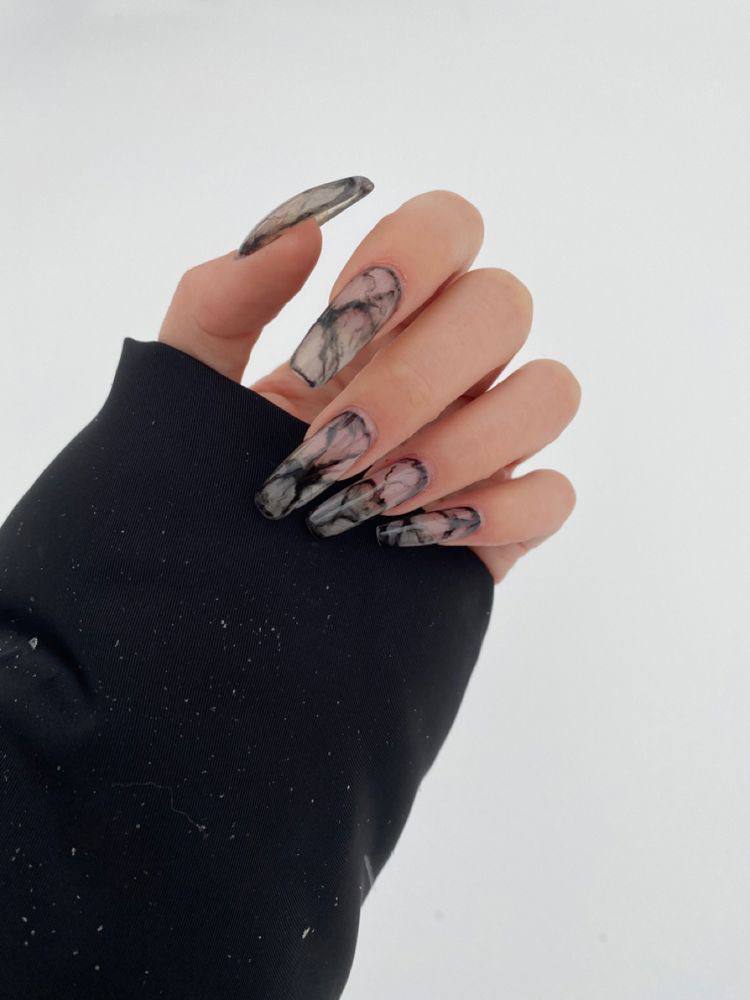
The Appeal of Mineral Textures
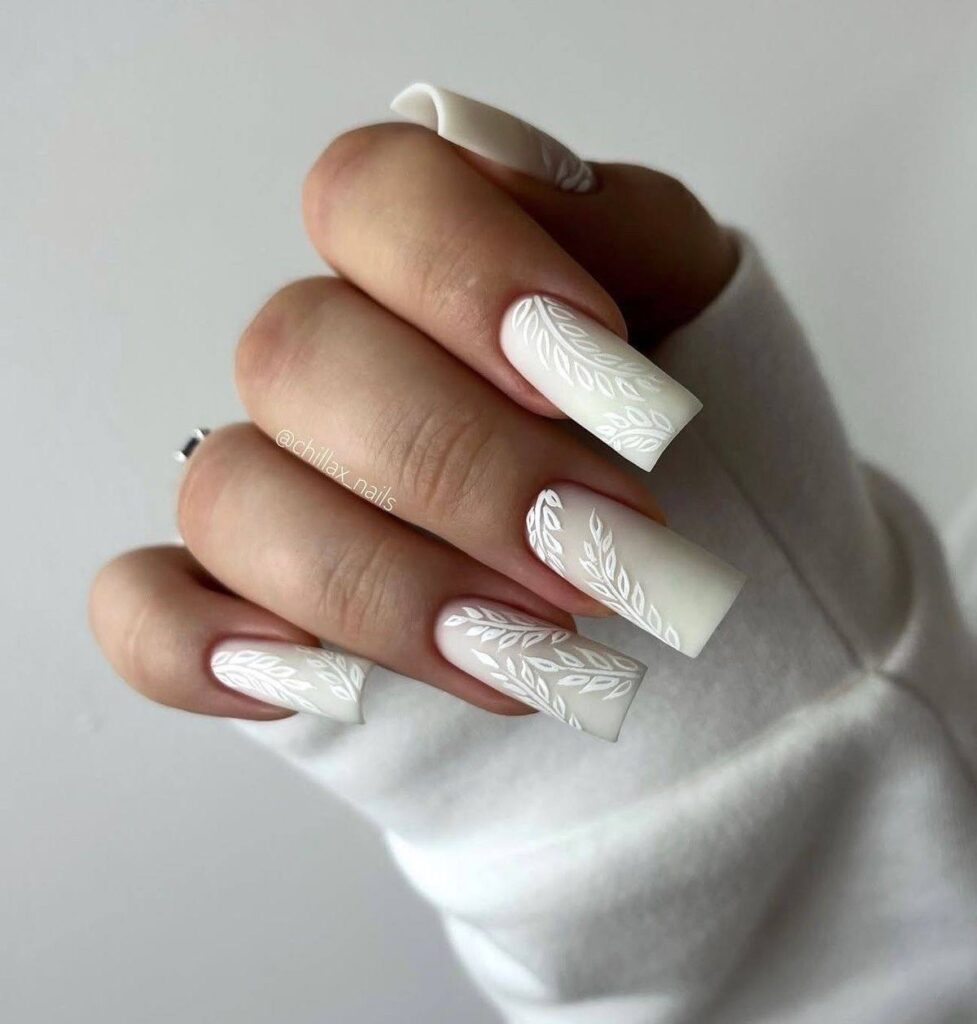
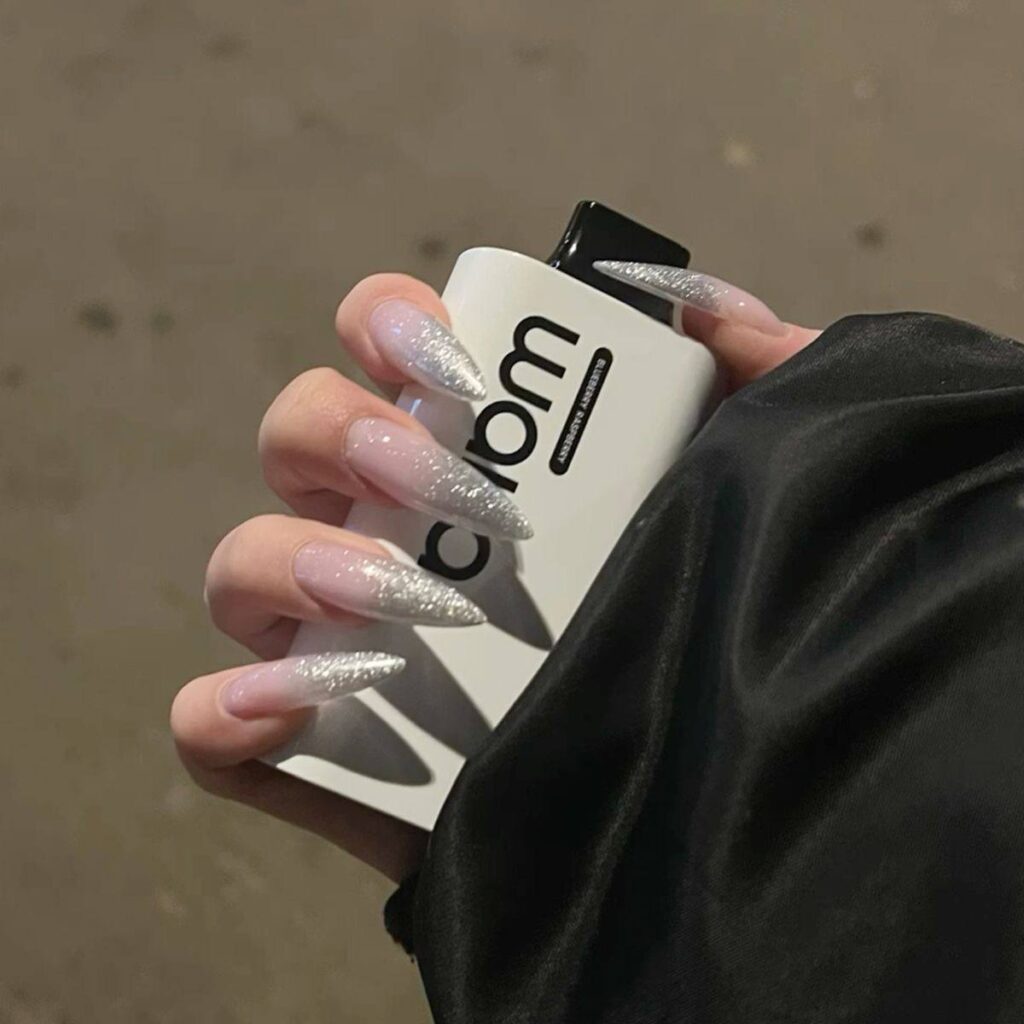
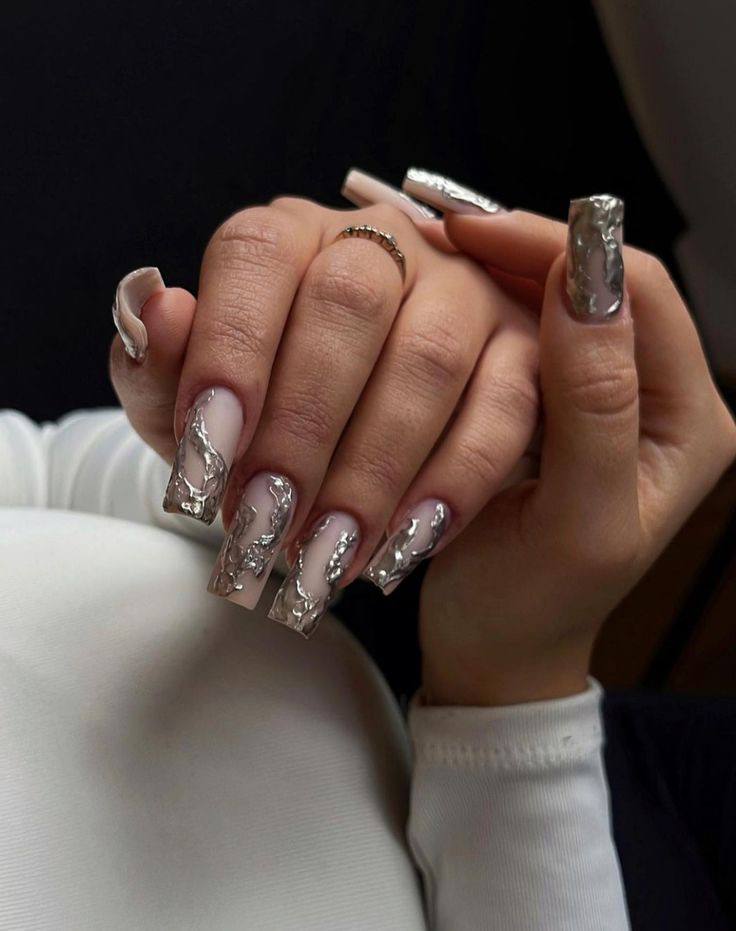
There is a particular shift occurring in high-end nail design where the focus has moved away from flat, solid pigments toward textures that mimic the natural world. Instead of searching for a single hue, you are likely looking for depth, movement, and a sense of weight. Marble nail art, specifically when executed in a translucent, stone-like finish, offers a level of sophistication that solid colors cannot replicate. When you combine the sharp, modern lines of a coffin shape with the organic, unpredictable veining of marble, you create a visual tension that feels both deliberate and effortless. This specific aesthetic, leaning into charcoal, slate, and muted blush tones, moves beyond simple trends and enters the territory of curated personal style.
Mastering the Jelly Base and Pigment Diffusion
The foundation of a convincing marble design lies in the base. To achieve the look seen in high-end editorial photography, you cannot simply paint a white base and draw lines on top. That results in a superficial, cartoonish effect. Instead, the technique requires a jelly base—a translucent, semi-sheer polish or gel that allows light to pass through the nail. This creates the illusion that the veining is suspended within the material, much like real quartz or marble.
If you are performing this at home, you will need a fine liner brush and a highly diluted pigment. You apply the sheer base first and cure it. Once the base is set, you work with a wet-on-wet technique. By applying thin, wispy lines of charcoal or deep grey while the base is still slightly tacky, or by using a blooming gel, you allow the pigment to bleed naturally. This diffusion is what creates the organic, feathered edges of a stone vein. If you find the lines too harsh, a tiny drop of clear topcoat or alcohol can be used to blur the edges, ensuring the transition from pigment to base remains soft and integrated.
Structural Integrity and the Coffin Silhouette
The coffin shape, characterized by its long, tapered sides and squared-off tip, provides a substantial canvas for detailed art. However, the length required for this silhouette demands technical precision in how the nail is constructed. When requesting this look at a salon, pay close attention to the apex placement. The apex is the highest point of the nail’s curve, located just past the stress area where the nail leaves the cuticle.
Without a correctly placed apex, long coffin nails are prone to snapping or bending at the mid-section. A skilled technician will build a reinforced structure using builder gel or acrylic to ensure that the weight of the extension is supported. This structural strength allows you to wear the design comfortably without the constant fear of breakage. The transition from the cuticle to the tip should feel smooth, with the tapered sides of the coffin shape providing a sleek, architectural frame for the marble patterns.
Sophisticated Color Theory and Seasonal Pairing
While black and white marble is a classic, the introduction of muted, desaturated tones like blush, mauve, or sand adds a layer of nuance. In the example of charcoal veining over a pale, dusty pink base, the color palette remains grounded. The grey provides a sense of edge and modernity, while the hint of pink softens the overall impact, making it suitable for a wide range of settings.
This palette is exceptionally versatile. For a professional environment, the charcoal tones dominate, offering a look that is polished and understated. For evening wear, the translucent nature of the jelly base catches the light, highlighting the depth of the veining. You can also adapt this aesthetic for different seasons. In autumn, you might lean into heavier, darker slate tones. In spring, you can lighten the base to a clear, watery tint with minimal, fine-lined veining for a look that feels more like polished glass than heavy stone.
Maintenance and Longevity
To maintain the clarity of a marble design, your upkeep must be consistent. Because the beauty of this look relies on the transparency of the base, any staining or yellowing will diminish the effect. Regular application of a cuticle oil barrier is necessary to keep the skin around the extensions hydrated, which prevents the appearance of dryness that can detract from a clean, manicured look.
As the manicure grows out, the shift in the apex can affect both the silhouette and the structural integrity. Aim for a professional fill every two to three weeks to redistribute the product and maintain the correct shape. When cleaning your hands, avoid harsh chemicals that can dull the high-shine topcoat, as the reflective surface is what truly brings the internal veining to life. A well-maintained marble manicure is not just about color; it is about preserving the illusion of depth and the precision of the shape.
Embracing Technical Artistry
Moving toward textural, mineral-inspired nail art requires a shift in how you view your manicure. It is an evolution from mere color application to a form of miniature painting. Whether you are refining your own technique with a liner brush or communicating specific structural needs to a professional, focusing on the interplay of translucency and shape allows you to wear a look that feels deeply intentional and visually complex.